
Why Scrap Metal Recovery Begins Long Before Magnetic Separation
In many recycling systems, the quality of metal recovery is determined before the material reaches the sorting equipment. The way scrap is prepared during the shredding stage has a direct influence on separation efficiency, equipment wear, and the overall value of the recovered material.
This is why experienced recycling operators increasingly focus on shredding quality rather than simply processing more tonnes per hour.
Mixed scrap rarely arrives in an ideal condition. End-of-life appliances, steel furniture, automotive components, cable bundles, metal drums, and industrial offcuts often contain several materials joined together. Steel may still be attached to plastic housings, copper wiring may remain inside metal structures, and aluminium components are frequently mixed with rubber or insulation.
If these materials enter the sorting process without proper preparation, downstream equipment has little opportunity to separate them effectively.
A magnetic separator can remove ferrous metals, but it cannot separate materials that are still physically connected. Likewise, an eddy current separator performs best when non-ferrous metals have already been liberated from surrounding materials.
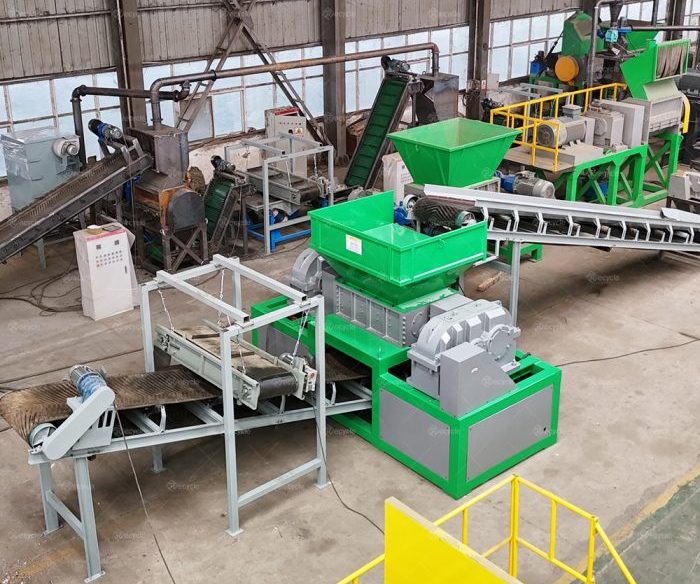
This is where the metal shredder becomes one of the most important machines in the entire recycling line.
Rather than focusing only on volume reduction, industrial shredders prepare scrap for the next stage of processing. By reducing bulky materials into consistent pieces and breaking mechanical connections between different materials, shredding creates conditions that allow downstream equipment to work more efficiently.
The objective is not to produce the smallest possible particle size.
Instead, the goal is controlled liberation.
If scrap leaves the shredder in pieces that are too large, valuable materials remain attached and cannot be separated efficiently. If the material is excessively shredded, fine particles increase dust generation, reduce material quality, and make separation more difficult.
Finding the right balance requires more than selecting a larger motor or increasing rotor speed.
Different waste streams require different cutting strategies.
Automotive scrap, for example, behaves very differently from household appliances or light-gauge steel. Thin sheet metal can fold around rotating cutters, while heavy structural components demand higher torque and slower cutting speeds. Cable-rich materials require sufficient cutting action to expose valuable copper without generating excessive fines.
These considerations influence blade configuration, rotor design, shaft speed, and feeding methods far more than headline capacity figures.
Another often-overlooked benefit of effective shredding is the reduction of downstream wear.
Uniform material flows place less stress on conveyors, screening systems, magnetic separators, and eddy current separators. Stable feed conditions also improve automatic sorting accuracy, reducing unexpected stoppages and maintenance requirements throughout the recycling line.
In recent recycling projects, we have found that increasing throughput alone rarely produces the best financial results.
More often, improving liberation before sorting creates a greater increase in recovered metal value than simply processing additional tonnes of scrap.
This is particularly true for mixed industrial waste, electronic scrap, and automotive recycling, where multiple materials are tightly integrated within each product.
For companies planning new recycling facilities or upgrading existing operations, the question should not simply be how much material the shredder can process.