
A Practical Solution for Recovering Copper and Aluminum
Every year, millions of old air conditioning units are replaced due to upgrades, damage, or changes in building requirements. Behind these discarded machines is a valuable material source that many recycling businesses are beginning to recognize—the AC radiator.
Although an air conditioner may appear to contain mostly plastic and electronic components, the radiator section contains large amounts of copper and aluminum. These metals have strong recycling value, but recovering them efficiently requires more than simple dismantling.
For scrap processors, the question is not whether AC radiators can be recycled. The real question is how to separate copper and aluminum quickly enough to make the business profitable.
The Challenge Behind AC Radiator Recycling
AC radiators are designed for efficient heat exchange, which means copper tubes and aluminum fins are tightly connected. This structure provides excellent performance during operation but creates difficulties when the equipment reaches the end of its service life.
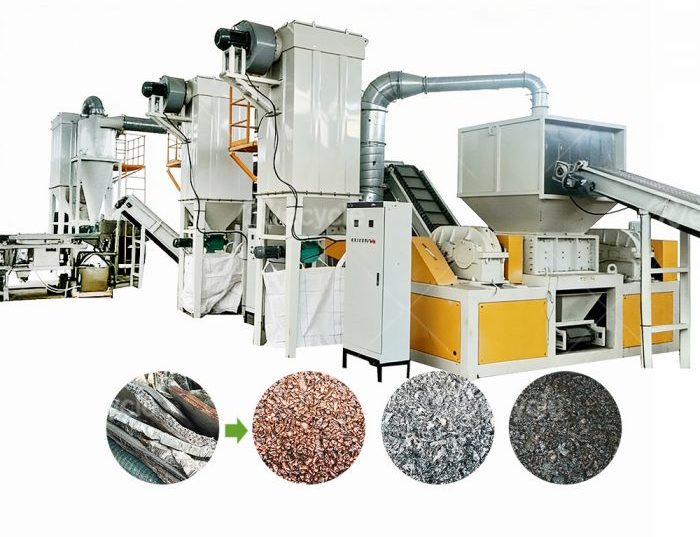
Small recycling workshops often rely on manual cutting or stripping methods. While this may work for limited quantities, labor costs increase rapidly when the supply of waste air conditioning units grows.
Manual processing also creates inconsistent results. Some materials may remain mixed together, reducing their resale value. For businesses that handle large volumes of scrap, improving separation efficiency becomes essential.
Why Businesses Choose Mechanical Recycling Systems
A professional AC radiator scrap recycling line helps companies move from labor-intensive processing to a more stable production model.
The process usually starts with preparing the radiator material and removing unwanted attachments. After that, specialized crushing and separation equipment helps release copper and aluminum components from the original structure.
The purpose of the system is not simply to make the material smaller. The real goal is to recover valuable metals with better purity while reducing material loss during processing.
Compared with manual dismantling, mechanical recycling allows companies to process larger quantities with fewer workers and more predictable output.
Selecting Equipment Based on Scrap Conditions
One important point often overlooked by new investors is that not all AC radiator scrap is the same.
Some materials come from household air conditioners, while others come from commercial cooling systems. The thickness of copper tubes, aluminum fin density, contamination level, and material size can all affect the recycling process.
This means equipment selection should be based on actual waste conditions rather than choosing a machine only by capacity.
At Henan Recycle Environmental Protection Equipment Co., Ltd., we develop customized AC radiator recycling solutions according to customers’ material characteristics and production requirements. Our systems can integrate crushing, sorting, and separation equipment to help customers achieve efficient copper and aluminum recovery.
Our engineering team evaluates factors such as raw material composition, expected output, and operating environment before designing the recycling line. This approach helps customers build a system that matches their business instead of purchasing unnecessary equipment.