
More News
Scrap Motor Crushing and Separation Plant
Scrap motors are widely generated from discarded electrical appliances, industrial equipment, automobiles, pumps, fans, compressors, and other machinery. Although these motors are no longer suitable for their original applications, they still contain valuable copper, aluminum, iron, and other recyclable materials. For recycling companies, the challenge is how to separate these materials efficiently without excessive manual labor. A Scrap Motor Crushing and Separation Plant provides a practical solution for converting mixed motor scrap into reusable metal fractions.
Why Recycle Scrap Motors?
A discarded motor usually contains a combination of steel housings, copper windings, aluminum components, insulation, and other non-metallic materials. Manual dismantling can recover some of these materials, but the process becomes inefficient when the processing volume increases.
A motor recycling plant changes this situation by using mechanical processing to break down motors and separate different materials. Instead of selling mixed motor scrap at a lower value, recyclers can produce cleaner metal fractions that are easier to sell to downstream metal processors.
The recovered copper is particularly valuable because copper windings are commonly found inside electric motors. Iron and steel can also be collected as a separate ferrous fraction, while aluminum can be recovered when the motor structure contains aluminum components.
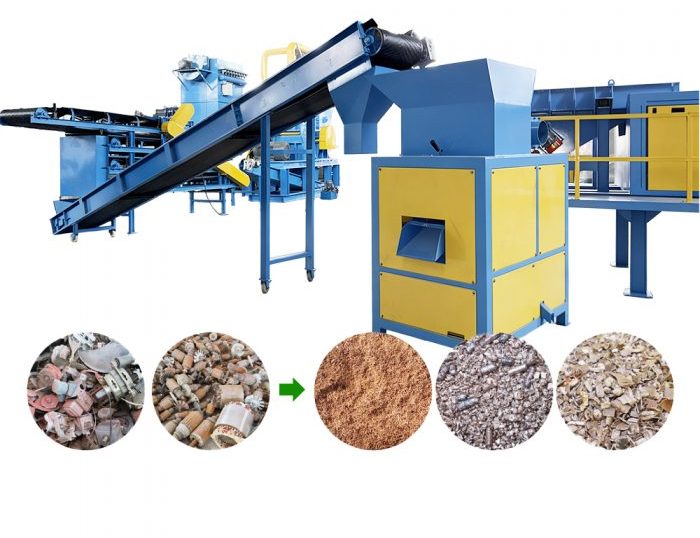
How Does a Scrap Motor Recycling Plant Work?
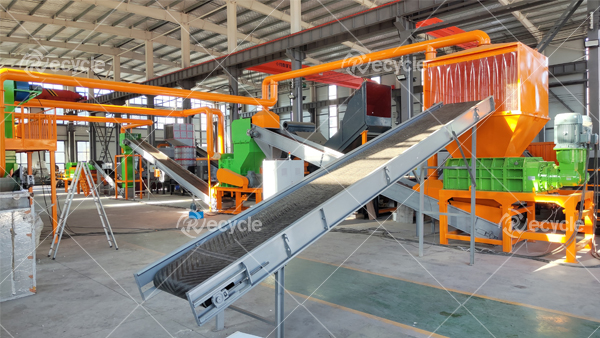
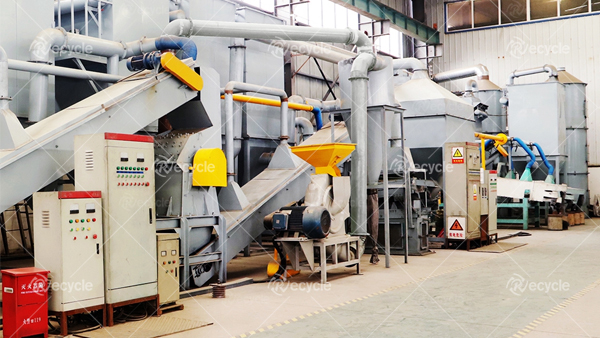
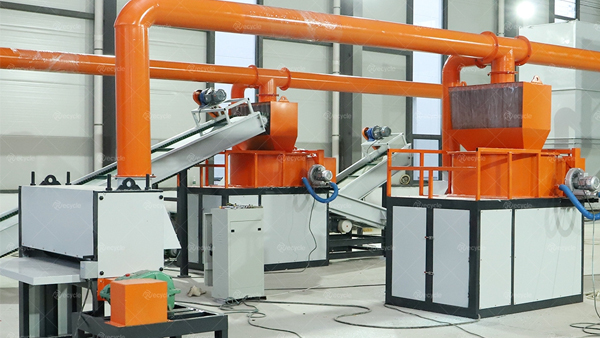
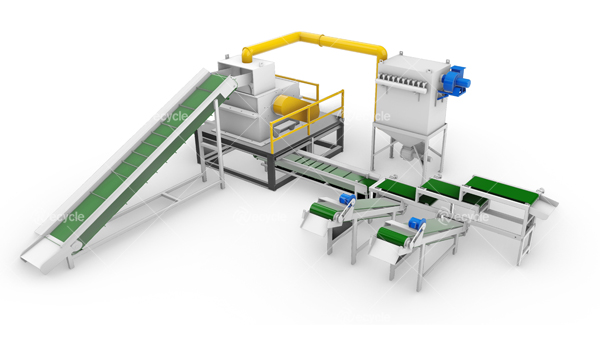
The exact configuration depends on the type, size, and quantity of scrap motors. However, a typical Scrap Motor Crushing and Separation Plant includes several processing stages.
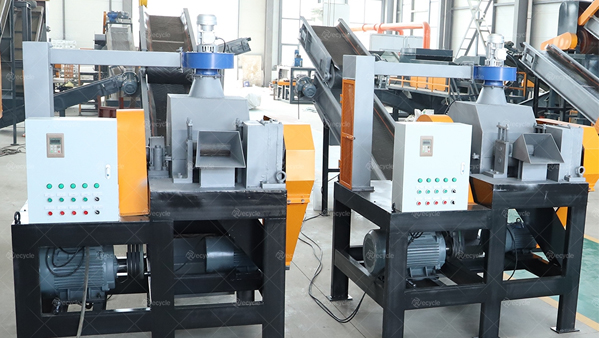
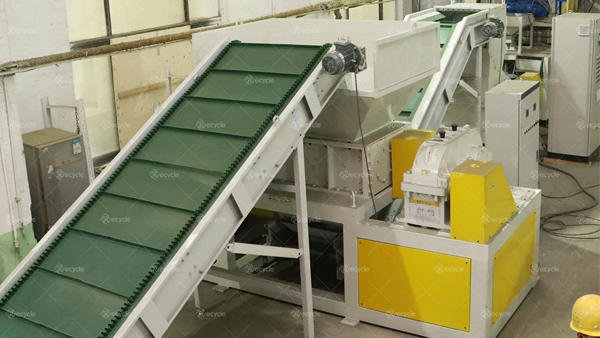
First, scrap motors are fed into a crushing or shredding machine. The equipment reduces the motors into smaller pieces and helps release copper windings and other embedded metal components. The machine is selected according to the motor dimensions, material strength, and required output size.
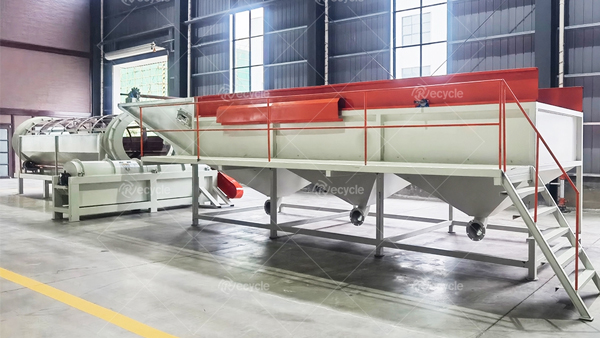
After size reduction, the crushed material enters a separation section. Magnetic separation is commonly used to remove iron and steel from the mixed material. Since ferrous metals respond to magnetic fields, they can be collected efficiently while non-ferrous materials continue through the processing line.
Further separation can be used to recover copper, aluminum, and other valuable fractions. Depending on the plant design, air separation, screening, eddy current separation, or other technologies may be integrated into the system.
What Can the Plant Recover?
The main objective is not simply to crush motors but to improve the purity and value of the recovered materials.
Copper from motor windings can be collected for further metal processing. Ferrous materials such as steel housings and shafts can be separated and sold as scrap steel. Aluminum components may also be recovered when present in the incoming motors.
The separation result depends strongly on the motor type and plant configuration. Therefore, recycling companies should evaluate their actual feedstock before selecting equipment.