
More News
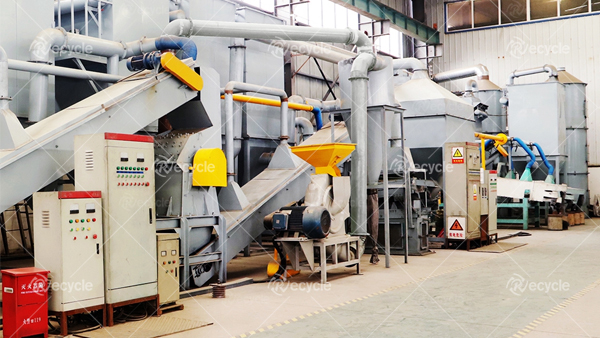
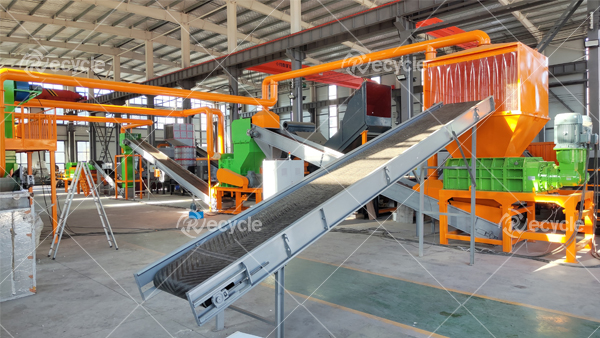
Complete Waste Tire Recycling Line
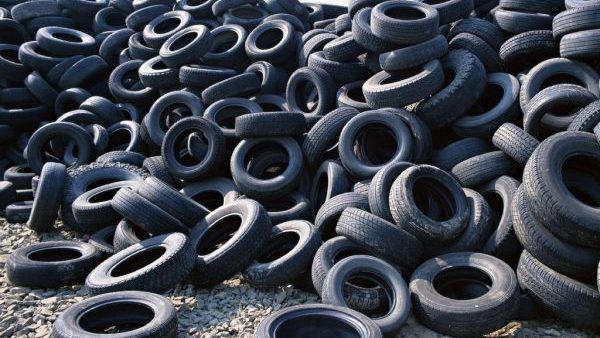
Waste tires are difficult to handle because of their strong structure, elastic rubber, steel reinforcement, and fiber content. Simply cutting or storing them does not solve the disposal problem. A complete waste tire recycling line provides a more practical approach by converting discarded tires into separated and reusable materials.
A modern tire recycling system normally combines several machines rather than relying on one piece of equipment. The exact configuration depends on tire size, required output, and the final products. For example, a basic system may produce tire chips, while a more advanced plant can manufacture rubber granules or fine rubber powder.
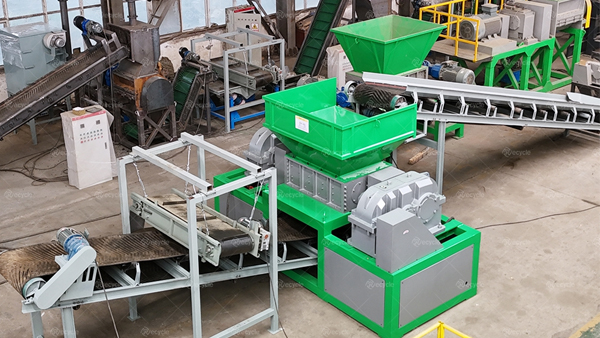
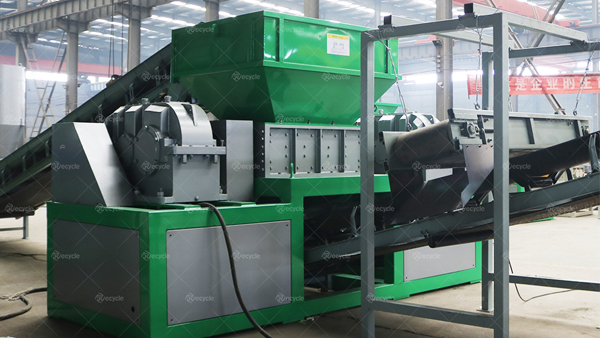
The first stage is usually tire size reduction. Whole tires are fed into a primary shredder, where rotating cutters tear them into smaller pieces. The purpose of this step is not necessarily to produce the final particle size. Instead, it prepares the tires for the following separation and refining processes. Large truck tires and passenger car tires may require different cutting capacities because their dimensions and steel reinforcement are not the same.
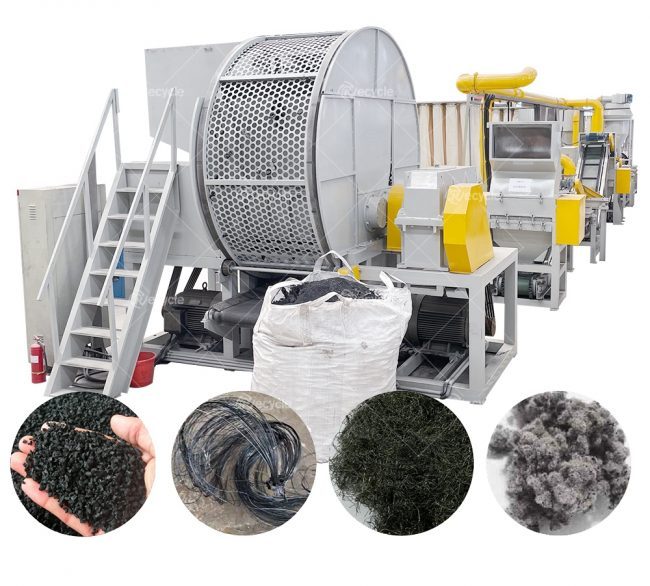
After primary shredding, the tire pieces can be reduced further through secondary shredding or granulation. This stage controls the size of the rubber particles. Depending on the customer’s requirements, the line can be designed to produce larger rubber chips, rubber mulch, granules, or smaller powder-like material.
Steel wire separation is another essential part of the process. Scrap tires contain a considerable amount of steel, especially in the bead and belt areas. Magnetic separation equipment is commonly installed after size reduction to collect ferrous metal from the rubber stream. Proper separation improves the quality of the recovered rubber while producing a relatively clean steel fraction that can be sent for metal recycling.
Tire fibers also need to be removed when a cleaner rubber product is required. Fiber separation equipment, screening systems, and air separation units can be arranged according to the material characteristics. The objective is to gradually remove unwanted components instead of forcing every separation task into one machine.
Particle size is controlled through screening and recirculation. Oversized rubber particles can be returned to the granulation stage, while qualified particles move forward. This closed-loop arrangement helps maintain a more consistent product size and reduces the amount of material that would otherwise require additional handling.
A complete waste tire recycling line can therefore be customized around the final application. Recovered rubber may be used in rubber products, flooring materials, modified asphalt, sports surfaces, and other applications. Recovered steel can enter conventional metal recycling channels, while separated fiber may be used in selected industrial applications depending on its composition and local requirements.
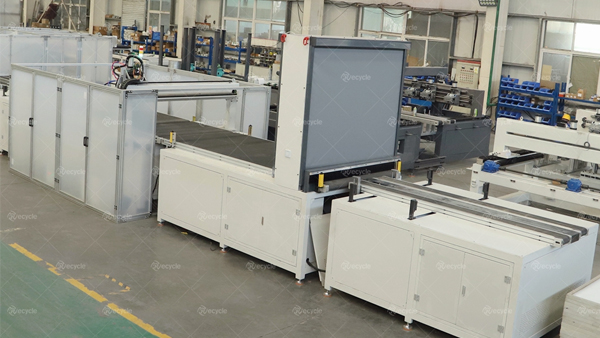
For recycling companies, the most important consideration is not simply the capacity of an individual shredder. The entire material flow needs to work together. Feeding, shredding, magnetic separation, screening, fiber removal, conveying, and dust control should be considered as one integrated system.
The right equipment configuration also depends on the types of tires available. A plant processing mainly passenger car tires may have different requirements from a facility handling mining, agricultural, or heavy truck tires. Tire diameter, steel content, moisture, target particle size, and expected daily throughput can all influence equipment selection.
A well-designed complete waste tire recycling line transforms a difficult waste stream into several useful material fractions. Instead of treating discarded tires as a storage or disposal problem, recyclers can establish a continuous processing system that creates recoverable rubber and steel while reducing the volume of waste.