
Automated Solar Panel Recycling Machine: Turning End-of-Life PV Modules into Valuable Resources
As solar energy continues to expand worldwide, the number of retired and damaged photovoltaic (PV) panels is also increasing. For recycling companies and waste management operators, this creates both an environmental challenge and a business opportunity. Recovering valuable materials from discarded solar panels requires more than simple dismantling. It calls for an efficient solar panel recycling machine capable of handling multiple processing stages and separating different material components.
An automated solar panel recycling plant provides a practical solution for processing end-of-life PV modules and recovering reusable resources, including aluminum, glass, silicon-containing materials, copper, and plastics.
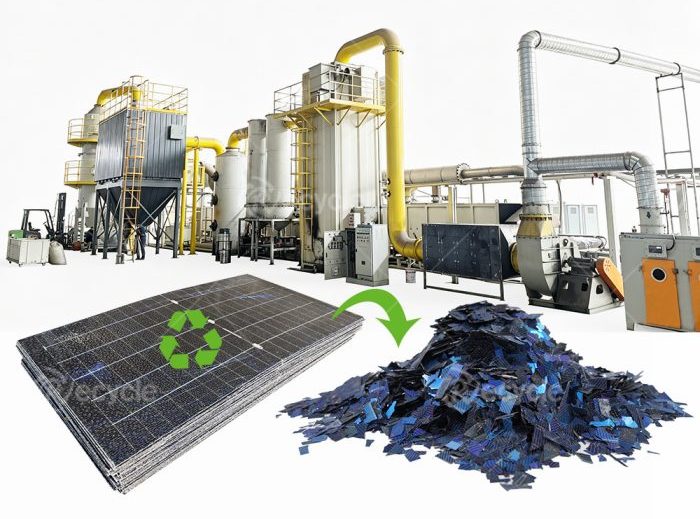
How Does an Industrial Solar Panel Recycling Machine Work?
A complete solar panel recycling line combines mechanical dismantling, crushing, grinding, and material separation technologies. Instead of treating the entire module as mixed waste, the system processes different components step by step to improve material recovery.
1. Automatic Feeding and Panel Identification
Waste photovoltaic panels are fed into the production line. Optional 3D scanning technology can identify panel structures and component positions, helping the system adapt to different panel specifications and improve processing accuracy.
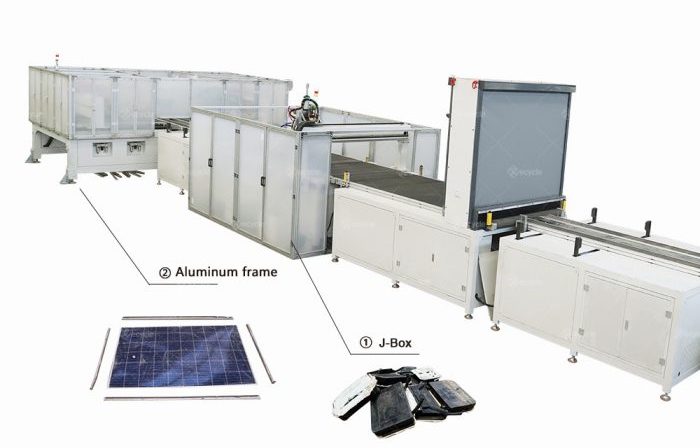
2. Aluminum Frame Removal
The aluminum frame is separated from the PV module before further processing. Recovering aluminum at this stage helps preserve material quality and reduces the amount of metal entering the subsequent crushing process.
3. Glass Separation and Delamination
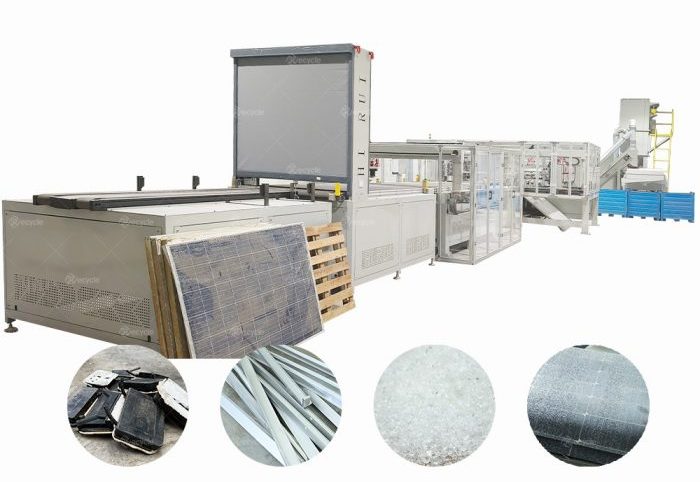
The glass layer is mechanically separated from the laminated panel structure. Further delamination helps release the encapsulating EVA material and exposes the internal components for downstream treatment.
4. Cutting, Crushing and Grinding
The remaining panel materials are processed through cutting, crushing, and fine grinding equipment. Particle size reduction prepares the materials for more effective downstream separation.
5. Airflow and Screening Separation
Air classification and vibrating screening technologies separate materials according to their physical characteristics and particle sizes. This stage helps recover metal particles, glass-related materials, plastics, and silicon-containing fractions.
What Materials Can Be Recovered from Waste Solar Panels?
A properly configured solar panel recycling plant can recover several material streams from discarded photovoltaic modules.
- Aluminum: Recovered from panel frames for metal recycling.
- Glass: Separated from the laminated structure for further processing and reuse.
- Copper and other metals: Recovered through mechanical crushing and separation.
- Silicon-containing materials: Collected in fine powder or mixed material fractions for further refining.
- Plastics: Separated into recyclable plastic fractions and powder materials.
The actual recovery results depend on the incoming panel condition, module structure, equipment configuration, and operating parameters.

Why Invest in a Commercial Solar Panel Recycling Plant?
For professional recycling operators, equipment selection directly affects processing efficiency, labor requirements, and the value of recovered materials.
An integrated solar panel recycling system offers several operational advantages. Automated frame removal and glass separation reduce repetitive manual dismantling. Coordinated crushing and grinding equipment creates more consistent material sizes, while airflow and screening systems support more effective sorting.
The production line can also incorporate robotic loading and 3D recognition technology to improve automation when processing panels with different structural specifications.
For investors planning a new recycling facility, selecting the right capacity and process configuration is essential. Factors such as daily panel volume, module dimensions, incoming material condition, available factory space, and downstream material buyers should all be considered before installation.
Customized Solar Panel Recycling Equipment for Different Processing Needs
Henan Recycle provides integrated solar panel crushing and recycling solutions for damaged, retired, and scrap photovoltaic modules.
The published RSKPVR-60 configuration features a rated power of 300 kW and a processing capacity of 50–60 panels per hour. The system integrates automatic feeding, frame removal, glass separation, crushing, grinding, and material sorting.
Depending on project requirements, the recycling plant can be configured with different automation levels and processing arrangements to suit the customer’s production targets.
If you are planning to establish or upgrade a photovoltaic waste recycling facility, choosing an integrated solar panel recycling machine is an important step toward improving resource utilization and building a more efficient recycling operation.