
How to Improve Solar Panel Recycling Efficiency
Improving solar panel recycling efficiency is not simply about increasing processing speed; it requires a systematic optimization of the entire recycling workflow, from dismantling and size reduction to material separation and recovery. As photovoltaic waste continues to grow globally, recycling plants must adopt advanced equipment and process control strategies to maximize recovery rates while minimizing operational costs. The efficiency of a solar panel recycling process is largely determined by how effectively it removes encapsulant materials such as EVA and separates glass, silicon, and metals without contamination.
The first critical factor is proper pre-treatment and dismantling. Solar panels contain aluminum frames, junction boxes, and cables that should be removed before entering the main recycling line. Automated dismantling systems significantly improve efficiency compared to manual operations by ensuring consistent removal and reducing labor costs. More importantly, pre-removal of these components prevents interference with downstream shredding and separation equipment, reducing wear and improving processing stability.
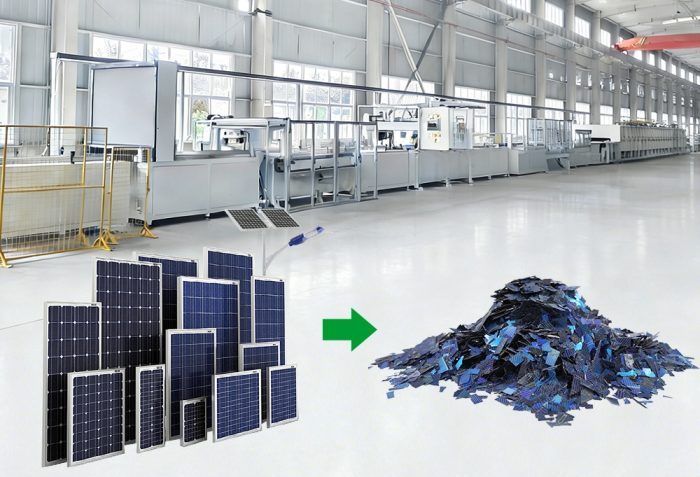
Mechanical size reduction must be carefully controlled to optimize material liberation. High-efficiency solar panel recycling plants use specialized crushers or shredders designed for laminated structures. Unlike traditional crushing systems, these machines apply controlled force to break glass layers while preserving the integrity of EVA and silicon cells. Proper fragmentation improves downstream separation efficiency and reduces material loss. Over-crushing, on the other hand, generates fine particles that contaminate recovered materials and reduce overall recovery value.
The separation stage is the core of efficiency improvement. Laminated glass separation machines play a decisive role by removing glass from EVA-coated cell structures. Advanced systems use compression rollers combined with friction-based peeling mechanisms to achieve high separation rates. Efficient separation ensures that glass cullet remains clean and reusable while concentrating valuable materials in the remaining fraction. Optimizing roller pressure and feed consistency is essential for achieving stable performance.
Thermal processing is another key factor in improving efficiency, particularly for EVA removal. Pyrolysis or thermal delamination systems decompose EVA at controlled temperatures, allowing clean recovery of silicon wafers and metallic components. Modern systems integrate temperature control and gas treatment units to ensure both efficiency and environmental compliance. Proper thermal management reduces energy consumption while maximizing material recovery.
Automation and process integration further enhance efficiency. PLC-controlled systems allow real-time monitoring and adjustment of key parameters such as feed rate, motor load, and temperature. Automated conveyors and sorting systems ensure consistent material flow and reduce manual intervention. Facilities that integrate mechanical, thermal, and separation processes into a continuous production line achieve significantly higher throughput and lower operating costs.
Finally, improving solar panel recycling efficiency requires a holistic approach that combines advanced equipment, optimized process design, and intelligent automation. Facilities that invest in high-performance shredding, separation, and thermal systems can achieve higher recovery rates, lower costs, and stronger competitiveness in the growing photovoltaic recycling industry.