
Choosing Capacity for Solar Recycling Plants
Selecting the right capacity for a solar recycling plant is not a simple matter of choosing a machine size or targeting maximum throughput. In practice, capacity planning is a multi-variable engineering decision that directly affects capital investment, operational stability, material recovery rate, and long-term profitability. Many recycling projects fail to reach expected returns not because of poor technology, but because the plant capacity is either overestimated or mismatched with real feedstock conditions.
The starting point for capacity selection should always be feedstock analysis rather than equipment specifications. Solar panel recycling plants do not process uniform materials; instead, they deal with highly variable inputs, including framed modules, frameless panels, damaged units, and mixed photovoltaic waste. Each of these categories behaves differently during dismantling, crushing, and separation. For example, intact modules with aluminum frames require additional pre-treatment time, while broken panels may increase dust generation and reduce downstream separation efficiency. Therefore, defining “tons per hour” without understanding material composition leads to misleading capacity assumptions.
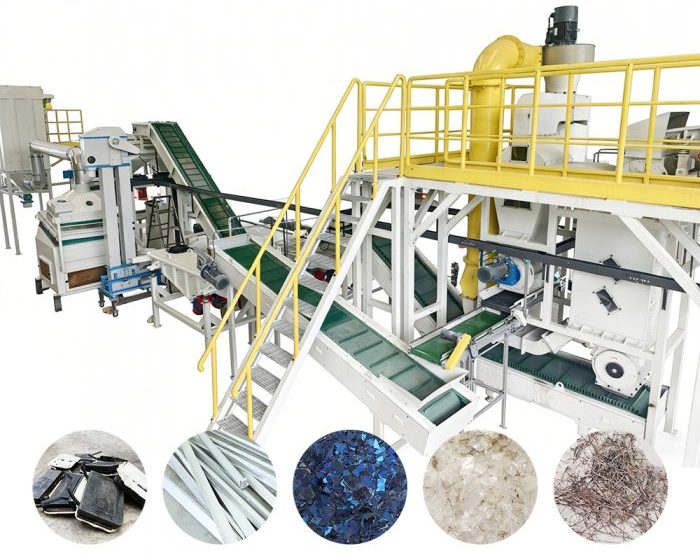
Storage and logistics also play a significant role in capacity planning. A plant designed for high throughput must have sufficient buffer zones for incoming and processed materials. Without proper material handling systems, even well-designed equipment will suffer from intermittent feeding, leading to reduced efficiency. Conveyor design, hopper volume, and loading methods should all be aligned with the target capacity to ensure smooth and continuous operation.
Energy consumption becomes increasingly important as capacity increases. Larger systems require more power, but the relationship is not always linear. In many cases, medium-capacity plants achieve better energy efficiency per ton processed compared to oversized systems operating below their optimal load. This is particularly relevant for solar panel recycling, where processes such as thermal EVA removal can be energy-intensive. Optimizing capacity to match actual demand can significantly reduce operating costs over time.
Scalability should be considered from the beginning. Instead of investing in a large, fully built-out system, many successful operators adopt a modular approach. This involves starting with a moderate-capacity line and expanding by adding parallel processing units as feedstock supply increases. Modular design reduces financial risk and allows operators to adapt to market changes without major system redesign.
Market demand is another often underestimated factor. The availability of end-of-life solar panels varies by region and policy environment. Overestimating supply can lead to underutilized equipment, while underestimating it may result in missed business opportunities. A balanced capacity strategy aligns plant size with both current supply and projected growth, ensuring stable utilization rates.
Finally, capacity selection must consider the quality requirements of output materials. Higher throughput is not always beneficial if it compromises separation efficiency or material purity. In solar panel recycling, the value of recovered glass, silicon, and metals depends heavily on contamination levels. Operating at excessively high capacity can reduce separation precision, ultimately lowering the market value of recovered materials.