
Recycling Plant for Electric Car Batteries
Choosing the right configuration for a recycling plant for electric car batteries requires a clear understanding of material variability, processing technology, and long-term scalability. Unlike homogeneous waste streams, battery recycling involves multiple chemistries such as NMC, LFP, and LCO, each with different processing requirements and recovery values.
Capacity planning should begin with feedstock forecasting. Regional adoption rates, policy incentives, and product lifecycles influence the availability of end-of-life electric vehicle batteries. Overestimating supply can result in underutilized equipment, while underestimating demand can limit growth opportunities. A modular plant design is often the most practical solution, allowing capacity to expand as feedstock availability increases.
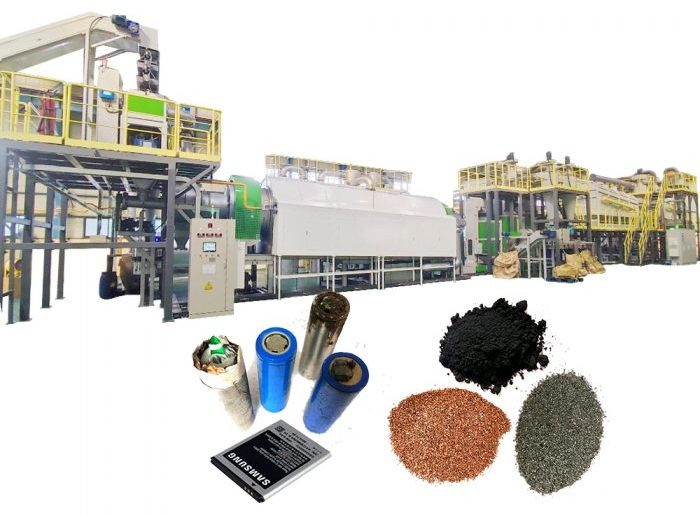
Technology selection is another critical factor. Mechanical pre-treatment combined with hydrometallurgical recovery is currently the most widely adopted approach due to its relatively high recovery rates and lower energy consumption compared to pyrometallurgical methods. However, the efficiency of this approach depends heavily on the quality of the black mass produced during mechanical processing. Therefore, the design of shredding and separation systems directly impacts downstream recovery efficiency.
A key engineering challenge is controlling material contamination. Improper shredding can mix metals and reduce the purity of recovered fractions, increasing refining costs. Advanced separation systems use a combination of screening, air classification, and density-based methods to improve material purity before chemical processing.
Energy consumption and operational cost must also be considered. Battery recycling plants involve energy-intensive processes such as shredding, drying, and chemical extraction. Optimizing system design to reduce unnecessary processing steps can significantly improve overall efficiency. For example, precise dismantling reduces the load on shredding systems and improves separation accuracy.
Designing a recycling plant for electric car batteries requires a strategic approach that integrates capacity planning, technology selection, and safety management. By focusing on system efficiency rather than individual equipment performance, operators can achieve higher recovery rates and sustain long-term, sustainable operation.