
How Solar Panel Recycling Production Lines Work
When people think about recycling solar panels, they usually list the materials involved: glass, aluminum, silicon, metals.
But the real challenge isn’t the materials—it’s how tightly they are layered together.
Each panel is built to survive decades outdoors. That means strong encapsulation, stable bonding, and resistance to environmental stress. All of these features make separation difficult later.
So a recycling line doesn’t just “process materials.” It systematically unlocks layers.
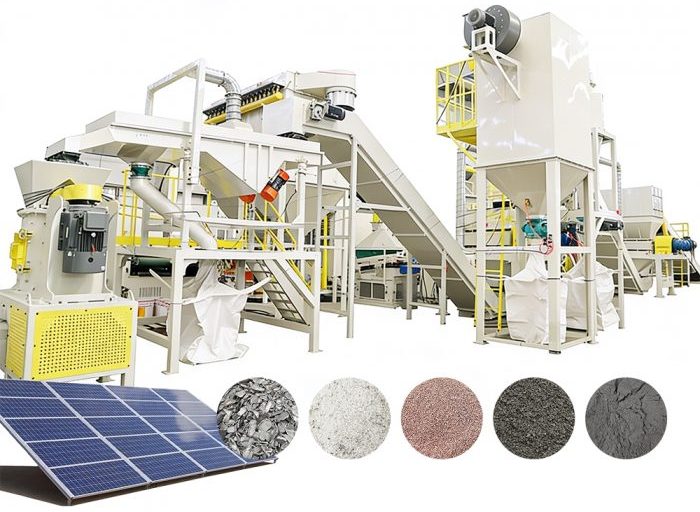
First, easily detachable parts are removed—not because they are valuable, but because they simplify everything that follows.
Then comes the critical stage: breaking the integrity of the panel without destroying the components inside. This is where most of the engineering effort goes.
Only after the structure is loosened do traditional processes—crushing, sorting, recovery—become effective.
Seen this way, a solar panel recycling line is less like a crusher system and more like a controlled disassembly line.
And the better it respects the original structure, the better the results.