
More News
Aluminium Medical Foil Recycling Machine
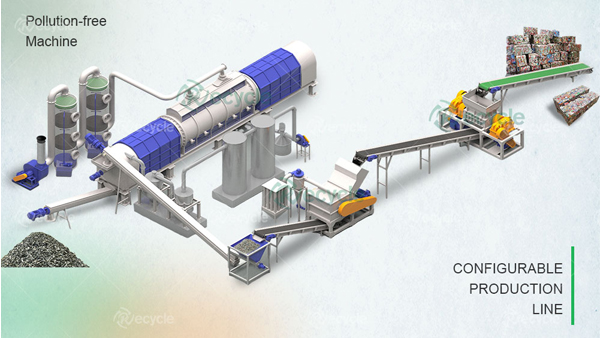
The growing use of aluminum foil in pharmaceutical packaging has created a steady stream of production scrap and discarded packaging materials. Although aluminum itself has a high recycling value, medical foil is not always suitable for direct remelting because it may be combined with plastic film, paper, coating, adhesive, or other packaging layers. An Aluminium Medical Foil Recycling Machine can help processors handle this type of waste more efficiently by separating, reducing, and preparing valuable aluminum for further recovery.
Why Medical Aluminum Foil Requires Specialized Recycling
Aluminum foil used in medical packaging is usually lightweight and relatively thin. When loose foil is processed, its large surface area and low bulk density can create difficulties for conventional recycling equipment. Pieces may wrap around rotating components, form compact bundles, or become mixed with non-metallic packaging materials.
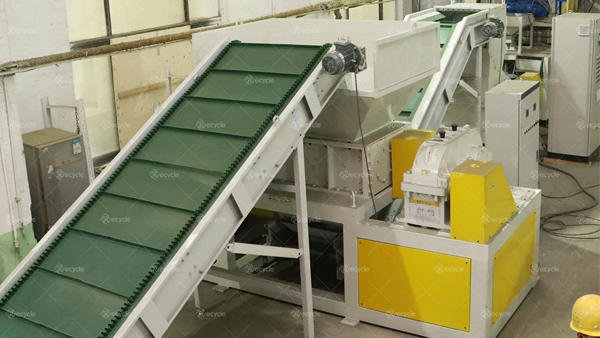
For this reason, the first objective of a recycling system is normally to make the incoming material easier to handle. Depending on the feedstock, a shredder or size-reduction machine can break large packaging pieces into a more manageable form. The resulting material can then enter additional separation or sorting stages.
Medical packaging waste may also contain plastic backing films, paper, coatings, or adhesive residues. These components should be considered when designing the recycling process. A machine configuration designed only for clean aluminum scrap may not provide the same performance when processing complex pharmaceutical packaging waste.
Typical Recycling Process
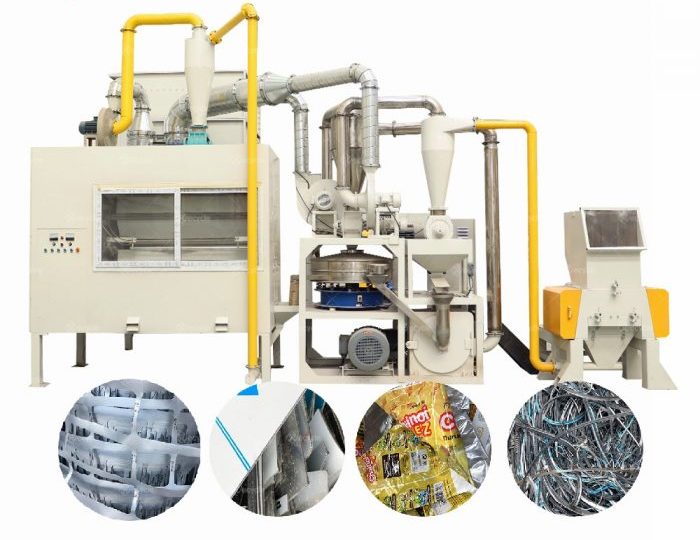
A complete aluminum medical foil recycling system can be configured according to the characteristics of the raw material.
The process generally starts with feeding and size reduction. Large pieces or compacted packaging are introduced into the recycling machine, where they are reduced into smaller particles or fragments. Controlled size reduction makes subsequent separation more consistent.
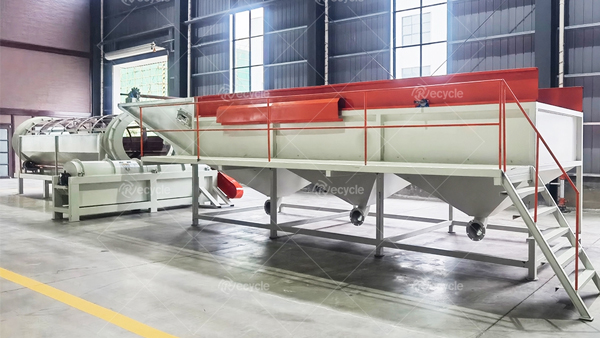
After shredding or crushing, the material can pass through screening equipment. Screening separates particles according to size and helps stabilize the material flow. If plastic, paper, or other lightweight components remain attached to the aluminum, additional separation equipment may be incorporated into the system.
Air separation is useful when there is a significant difference in density between aluminum and lightweight non-metallic materials. Magnetic separation can also be used when ferrous contaminants are present. For systems requiring higher separation accuracy, additional sorting technology can be selected according to the composition of the feedstock.
The recovered aluminum fraction can then be collected for downstream processing, such as briquetting, melting, or other metal recycling applications.
Choosing the Right Recycling Machine
There is no single machine configuration that fits every medical foil recycling application. The correct solution depends largely on what the material looks like before processing.
For clean production offcuts, a relatively simple size-reduction and collection system may be sufficient. For pharmaceutical packaging containing plastic or paper layers, a more complete separation process is usually preferable.
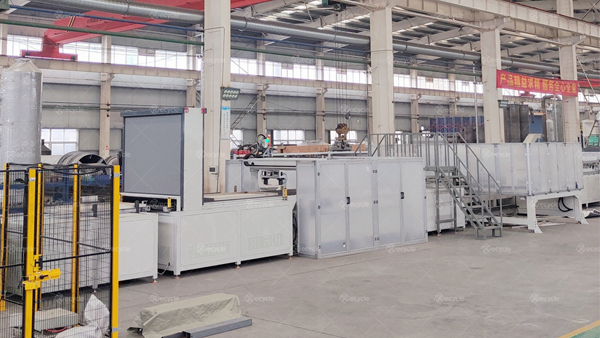
Processing capacity is another important factor. A small packaging manufacturer may only need a compact system, while a recycling company handling material from multiple sources may require a continuous production line with automatic feeding and separation.
The desired output also matters. If the recovered aluminum will be sent directly to a metal processor, the system should focus on producing a clean and consistent aluminum fraction. If the material will be melted in-house, the recycling process may need to be designed around the requirements of the furnace.