
Automated Refrigerator Recycling Systems VS Manual Dismantling
Many small recycling workshops still process refrigerators manually. Workers remove compressors, cut metal panels, and separate materials piece by piece. At low volumes, this approach may seem economical. But as appliance waste volumes continue growing, manual dismantling exposes serious limitations.
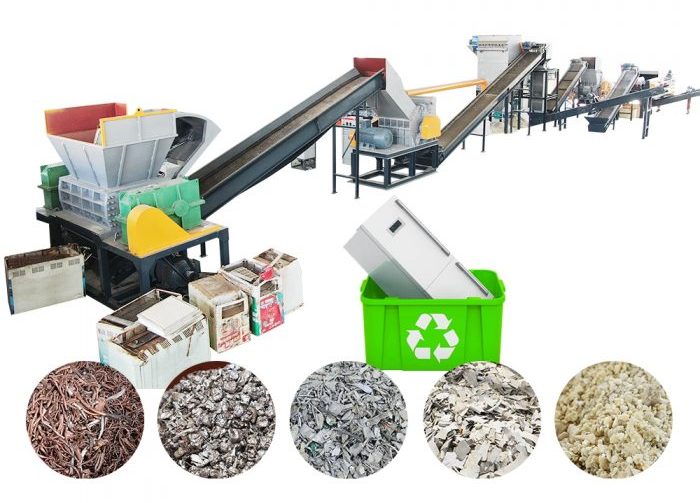
Manual operations often create unstable recovery quality, inconsistent material separation, high labor dependency, and safety risks. Foam dust, sharp metal edges, and refrigerant handling also increase environmental and workplace challenges.
One of the biggest advantages is continuous processing capability: Automated systems allow refrigerators to move through feeding, crushing, and sorting stages without repeated manual intervention. This improves throughput dramatically while reducing labor intensity.
In manual dismantling, separation quality depends heavily on worker experience and operating speed. Automated systems maintain stable crushing and sorting performance, producing cleaner ferrous and non-ferrous fractions over long operating periods.
Another important benefit is compressor processing efficiency: Compressors contain valuable copper and steel, but extracting these materials manually requires time and labor. Integrated recycling systems improve liberation efficiency during crushing, making downstream metal recovery more effective.
Dust management is another area where automated systems outperform manual methods.
Refrigerator insulation foam creates large amounts of fine particles during processing. Modern recycling machines integrate enclosed structures and centralized dust collection systems that improve environmental control significantly.
This not only improves workshop conditions but also reduces maintenance issues caused by dust accumulation.
Automated refrigerator recycling machines help bridge that gap by improving both recovery efficiency and material quality simultaneously. In the end, the real advantage is not simply speed.
It is operational control. And in modern recycling plants, better control usually leads directly to better profitability.