
More News
Full Process Analysis of Photovoltaic Panel Recycling Equipment
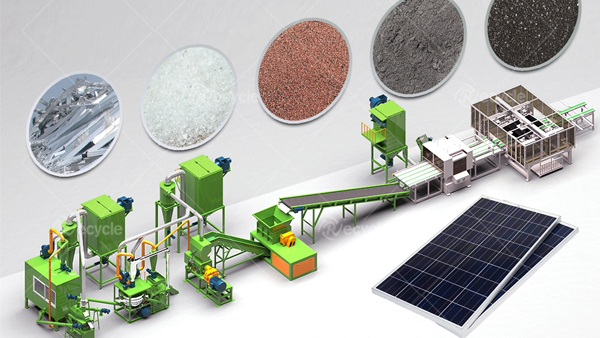
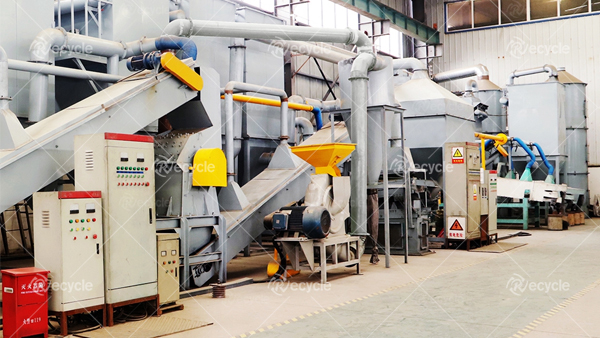
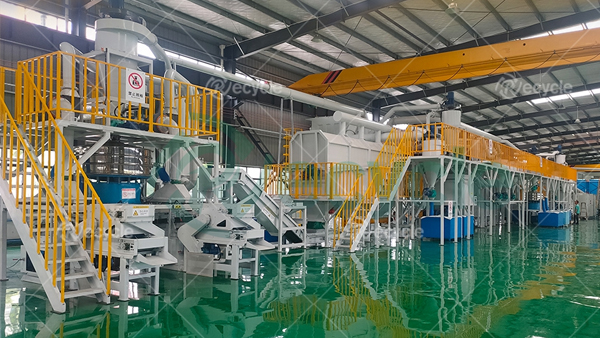
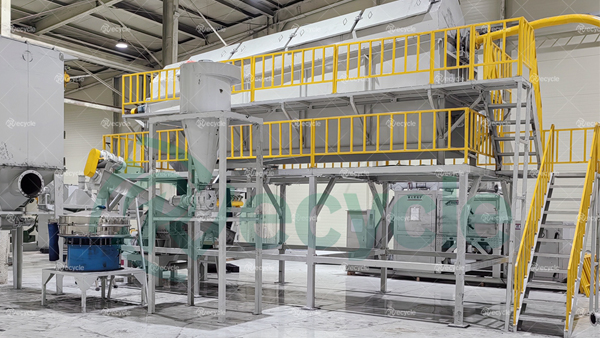
Many people believe that photovoltaic panel recycling is simply “shredding and sorting.” In reality, a mature photovoltaic panel recycling production line is a systematic project integrating mechanical, automation, thermal, environmental protection, and sorting technologies. Whether the processing flow is logical and the equipment configuration is scientific directly determines the recycling rate, material purity, operational costs, and final profit.
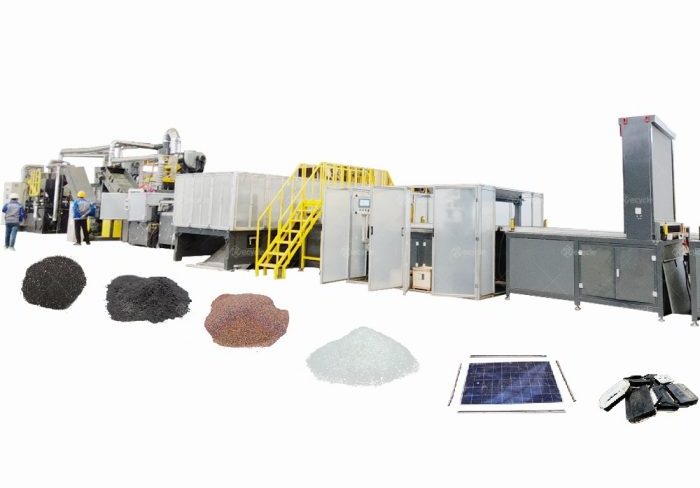
Step 1: Automatic Feeding and Preprocessing
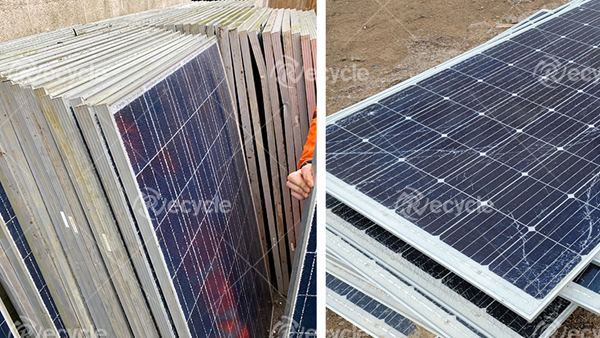
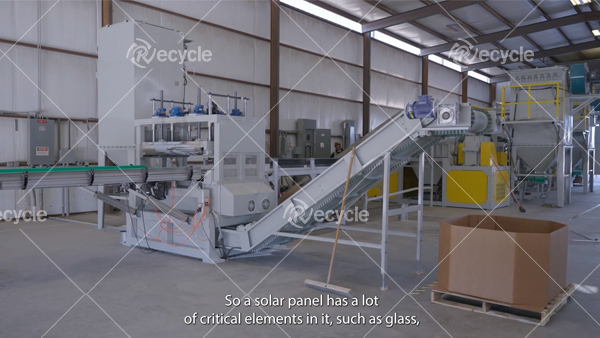
Retired photovoltaic panels come in various specifications, making manual handling inefficient. The automated recycling line is equipped with roller conveyors, size recognition, and positioning correction modules, enabling compatibility with different panel sizes. It automatically adjusts positions to prevent jams and damage, laying the foundation for stable subsequent operation.
Step 2: Automated Frame Removal and Junction Box Dismantling
The aluminum frame accounts for approximately 18% of the photovoltaic panel’s weight, featuring high value and recyclability. Traditional manual frame removal is time-consuming and prone to deformation. The professional photovoltaic panel frame removal machine employs 3D visual positioning + servo robotic arm technology, enabling precise clamping and smooth detachment with a frame integrity rate exceeding 99%. The separated aluminum material can be directly smelted into high-purity aluminum ingots. Additionally, it is equipped with an automatic junction box separation device that uses thermal melting to cut and separate the plastic casing from copper conductors, achieving a copper recycling rate close to 100%.
Step 3: Glass Removal and Laminated Component Disassembly
This is the core challenge in photovoltaic recycling. The glass of photovoltaic panels and the solar cells are strongly bonded by EVA adhesive film. Traditional high-temperature treatment can easily damage silicon wafers and generate exhaust gases. Mature equipment employs low-temperature pyrolysis/low-temperature cryogenic embrittlement technology, gently decomposing the adhesive film under oxygen-free sealed conditions to achieve non-destructive separation of glass and solar cells. This significantly improves the intact rate and purity of the glass, making it suitable for direct use as building materials or recycled glass raw material.
Step 4: Two-stage crushing and impurity removal
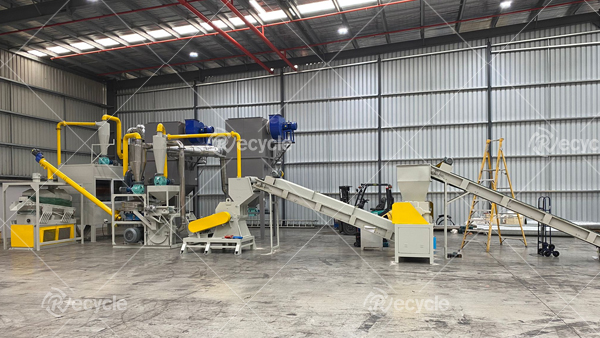
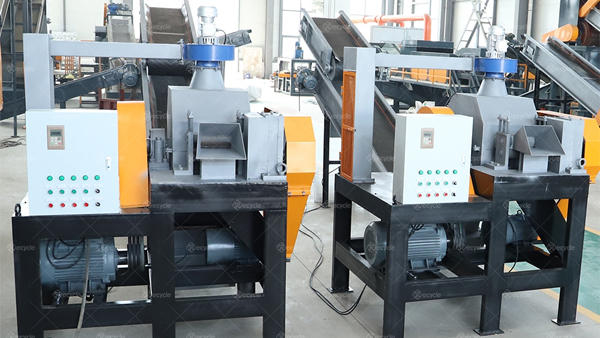
The stripped components enter the twin-shaft shredder and fine crusher, ensuring uniform particle size and avoiding excessive fragmentation that could complicate sorting. The crushing process is equipped with negative pressure dust removal and sealed conveying to prevent dust leakage, meeting environmental emission standards.
Step 5: Multi-level Intelligent Sorting (Determining Purity and Yield)
Multi-stage sorting can separate high-value materials such as silicon, glass, aluminum, copper, and silver individually, with higher purity leading to higher selling prices.
The complete process enables a standardized photovoltaic panel recycling system to achieve: an aluminum frame recycling rate of ≥99%, a glass recycling rate of ≥95%, a silicon material recycling rate of ≥98%, a comprehensive precious metal recycling rate of ≥95%, and an overall resource utilization rate exceeding 95%, truly ensuring harmlessness, resource utilization, and high value. Installation and after-sales maintenance capabilities directly determine the long-term profitability of the production line.