
More News
PCB Board Recycling And Building an Efficient E-Waste Recycling Plant
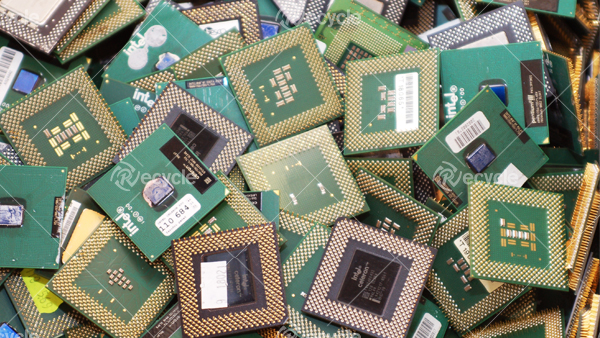
The rapid growth of electronic products has led to a growing number of discarded circuit boards. Computers, servers, telecom equipment, appliances, and industrial electronics all generate PCB scrap containing copper and other recoverable metals, as well as small amounts of precious metals.
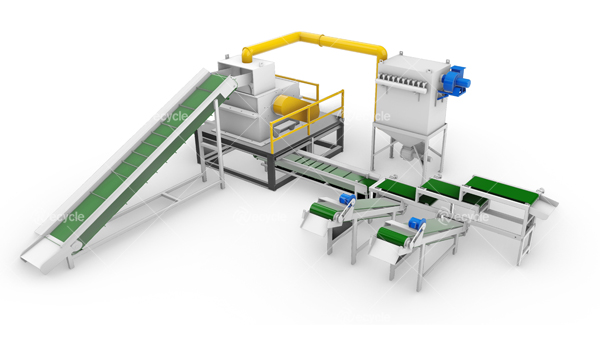
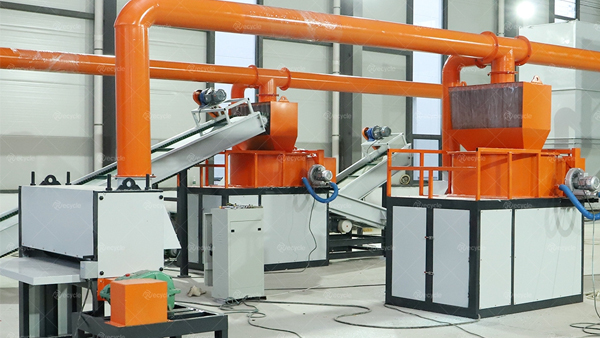
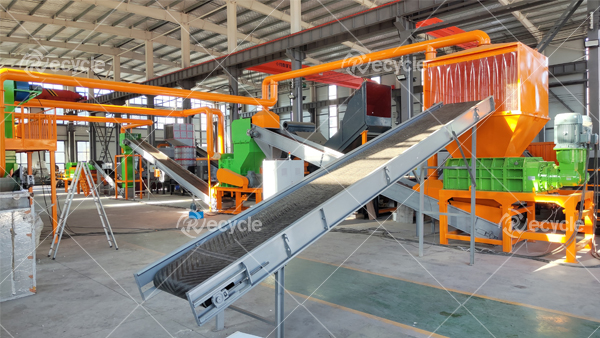
For recycling companies, the challenge is to process this complex material efficiently. PCB board recycling and gold recovery machinery provides a mechanical solution based on controlled crushing, grinding, and material separation.
From PCB Scrap to Recyclable Materials
A waste PCB consists of copper traces, metal terminals, electronic components, fiberglass, and resin. Manual dismantling may be suitable for small quantities, but it becomes less practical as processing volumes increase.
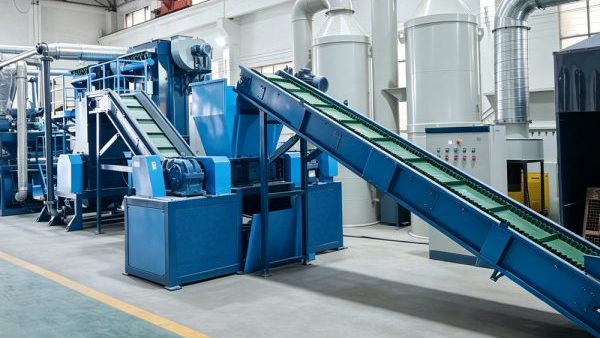
A mechanical recycling line reduces PCB scrap to controlled particle sizes and then separates the different materials. This creates a continuous process with less dependence on manual sorting.
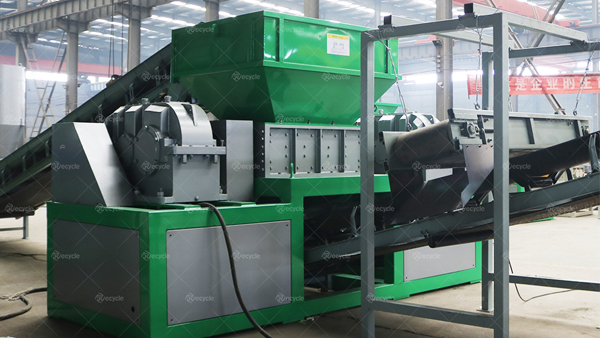
Crushing is the first major stage. Larger boards are broken into smaller pieces, making them easier to process. Fine grinding can then liberate metal particles from fiberglass and resin.
However, excessive grinding is not always beneficial. The output size should be selected according to the characteristics of the material and the requirements of the separation system.
Separating Valuable Metals
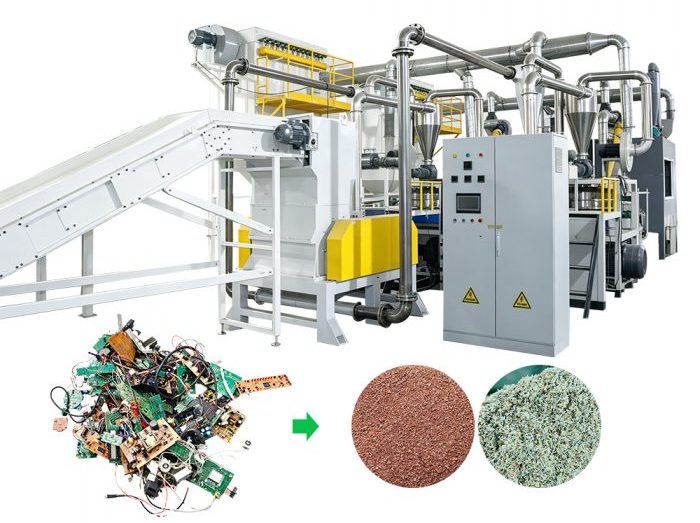
After grinding, the mixed material can pass through several separation stages. Magnetic separators remove ferrous particles, while air separation can help separate lightweight non-metallic materials.
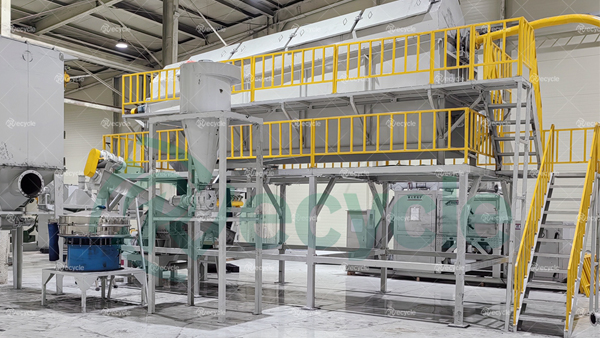
Electrostatic separation is also important in PCB recycling because metals and non-metallic materials respond differently to an electrical field. This allows the system to concentrate conductive metal particles and improve the quality of the recovered material.
Gold recovery is normally a downstream process. The mechanical recycling line concentrates the metal-rich fraction rather than producing refined gold directly. This means later refining can focus on a smaller and more concentrated material stream.
What to Consider Before Buying a PCB Recycling Plant?
Processing capacity is one of the most important considerations. A small recycling workshop and a large e-waste processing facility require very different equipment configurations.
The type of PCB is equally important. High-grade computer boards may have different metal content and processing characteristics from mixed appliance boards or telecom PCBs.
Before purchasing equipment, recyclers should consider:
* PCB type and feedstock composition
* Required processing capacity
* Output particle size
* Expected metal recovery
* Separation requirements
* Installation space
* Dust collection
* Automation level
* Maintenance and operating costs
A professional equipment supplier can recommend a more suitable configuration after evaluating the customer’s actual raw materials.