
Solar Panels Recycle Machine Line for End-of-Life PV Modules
As solar installations expand, the volume of damaged, defective, and retired photovoltaic modules is rising. Recycling companies need practical solutions to process these panels efficiently, recover valuable materials, and reduce the waste sent for disposal.
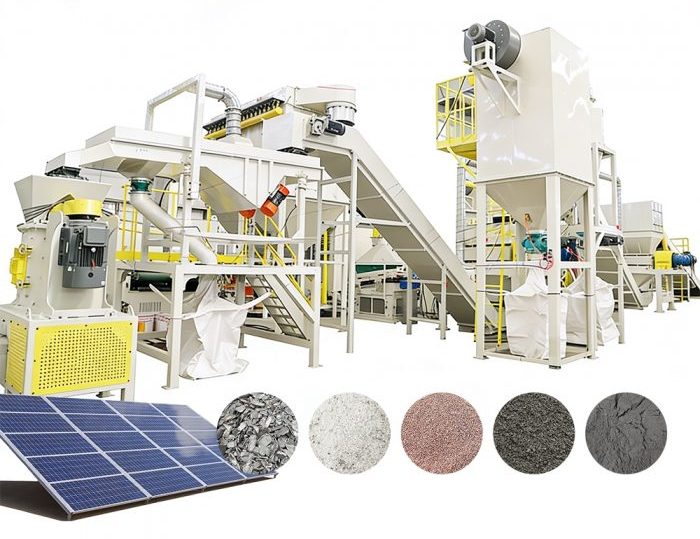
A solar panel recycle machine line provides an integrated approach to PV module processing. Rather than treating every component as mixed waste, the system separates materials through a series of mechanical processing stages designed around the construction of the solar panel.
How Does a Solar Panel Recycling Line Work?
A typical PV recycling line begins with inspection and the removal of components that can be separated before crushing. The exact configuration depends on whether the incoming panels are framed modules, bifacial double-glass panels, or other PV designs.
A mechanical processing line may include the following stages:
Panel feeding and inspection: Operators check the condition and dimensions of incoming modules.
Frame removal: An automated deframing machine separates the aluminum frame from the laminated panel.
Glass separation: Suitable equipment removes or separates glass from the remaining panel structure.
Lamination treatment: Depending on the selected process, thermal or mechanical treatment helps deal with the encapsulant and bonded layers.
Crushing and grinding: Remaining materials are reduced to smaller particles when required.
Material separation: Screening and suitable separation technologies help recover glass fragments, metal fractions, and other material streams.
Not every project requires every stage. A line designed primarily for frame and glass recovery may differ significantly from a plant intended to process the entire module and recover additional materials.
What Should Buyers Consider Before Investing?
Panel construction is one of the most important design factors. Traditional framed modules and double-glass bifacial panels have different dismantling requirements. Panel dimensions, glass thickness, adhesive layers, and the condition of incoming modules can also influence equipment selection. Capacity must be evaluated together with the complete process. A fast frame-removal machine cannot compensate for a slower downstream separator. Buyers should therefore compare the throughput of the integrated line rather than considering individual machines in isolation.
Automation, operator safety, maintenance access, dust collection, and the handling of broken glass also deserve attention during plant planning.
Frequently Asked Questions
Can one solar panel recycling line process different PV modules?
Some systems can accommodate multiple panel types, but compatibility depends on module dimensions, construction, and the selected equipment configuration.
What materials can be recovered?
Depending on the process, a line may recover aluminum frames, glass, copper-containing fractions, and other material streams. Actual recovery results depend on the module and process design.
Is a complete line better than purchasing separate machines? An integrated line can simplify material flow and system coordination. Individual machines may be appropriate for businesses with narrower processing objectives.
A properly configured solar panel recycle machine line helps recycling operators turn end-of-life PV modules into more manageable material streams. The best solution is the one that matches the incoming panels, target recovery products, and expected production volume.