
More News
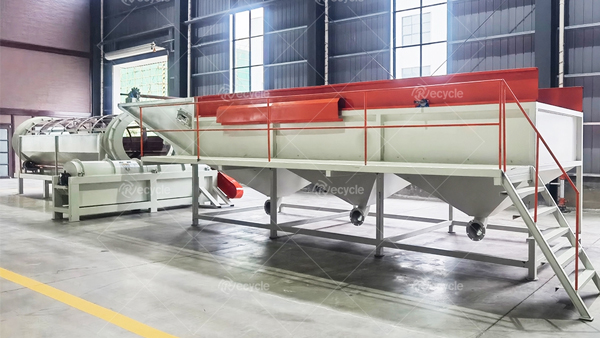
Turning Waste Circuit Boards into Recoverable Resources.
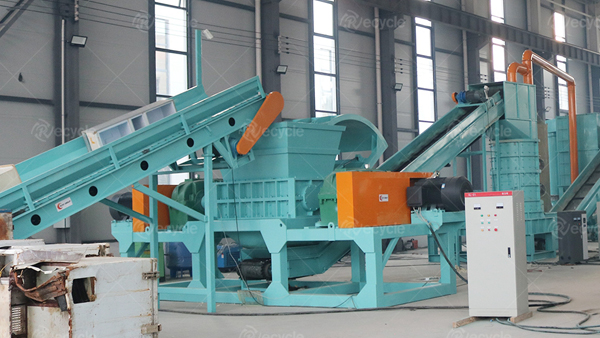
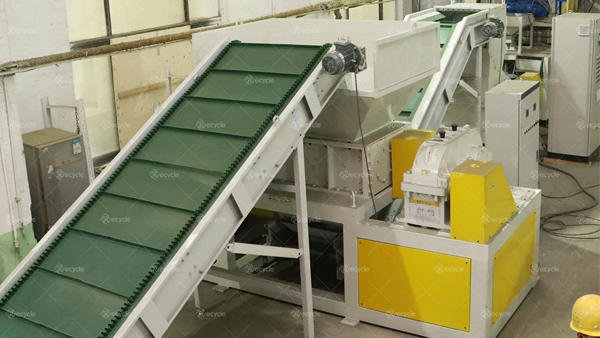
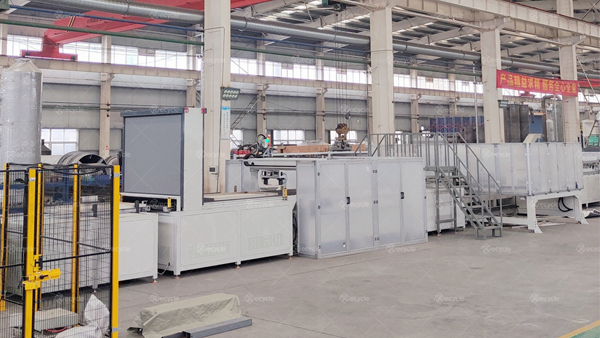
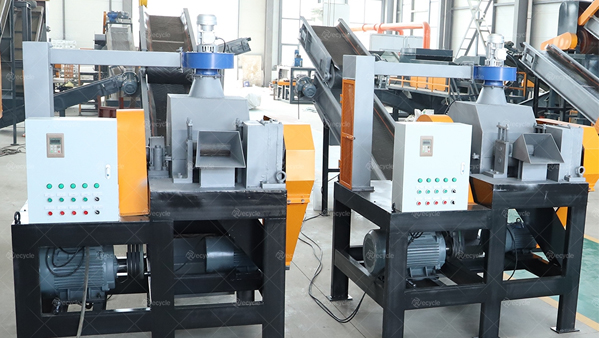
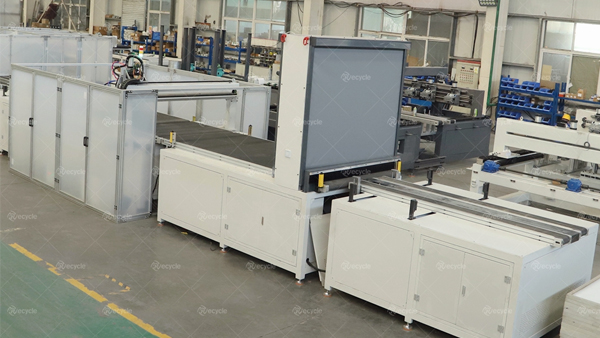
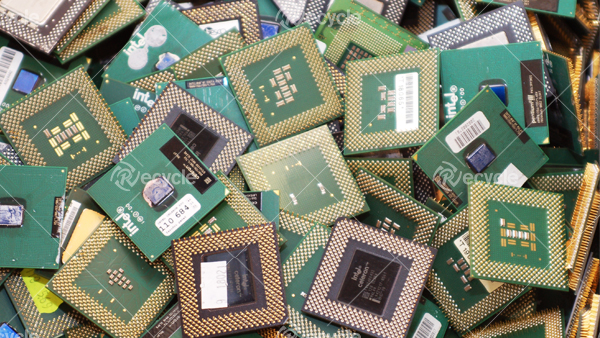
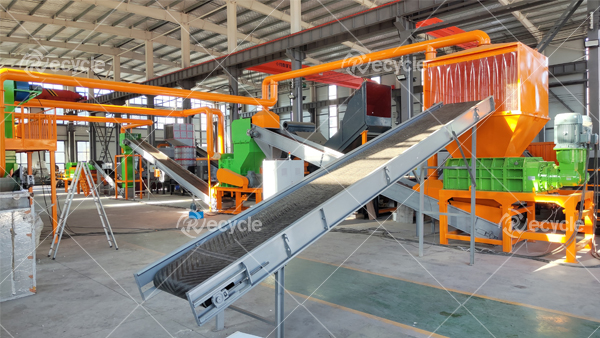
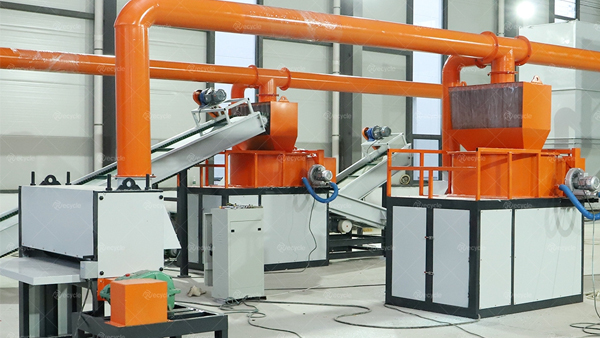
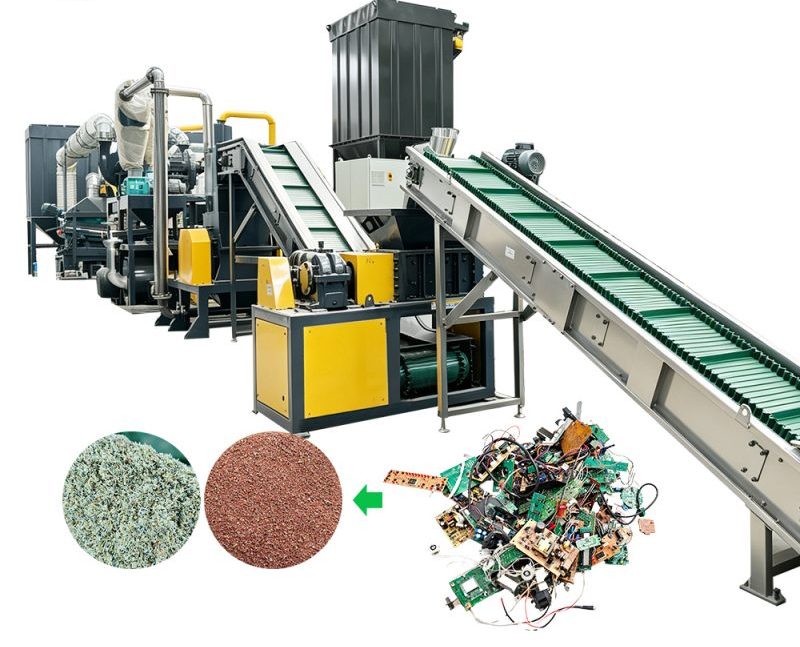
A PCB E-Waste Recycling Machine provides a mechanical processing solution for converting discarded circuit boards into separated material streams. The process can reduce PCB waste into smaller particles and use physical separation technologies to concentrate valuable metals.
From Electronic Scrap to Recyclable Material
The recycling process starts with a simple challenge: a PCB is made from several materials that are permanently combined during manufacturing. Copper is embedded within the board structure, while fiberglass and resin form much of the board body. Electronic components are mounted on the surface, and other metals may be present in solder, connectors, and component leads. Because these materials have different physical characteristics, the recycling process focuses on liberating them first and separating them afterward.
First: Preparing PCB Scrap
Before the main processing stage, incoming electronic scrap should be inspected and sorted. Different PCB sources can have different compositions. A board recovered from a computer may not behave in the same way as a board from industrial equipment. Some materials may also contain large components that should be removed before mechanical processing.
Pre-sorting helps create a more consistent feedstock and reduces the possibility of unsuitable materials entering the crushing system.
The prepared boards can then be introduced into the recycling line at a controlled rate. Size Reduction Releases the Embedded Materials
Second: Crushing is one of the most important stages in PCB recycling.
A complete circuit board cannot normally be separated efficiently simply because copper and fiberglass have different densities. The materials must first be liberated from the board structure. The crushing stage breaks the boards into smaller pieces. Depending on the equipment configuration, a secondary grinding process can further reduce the material. The target is not necessarily the smallest possible particle. Instead, the objective is to achieve a particle size that allows downstream separation to work efficiently. This distinction is important when designing a PCB recycling machine. Excessive grinding can increase energy consumption and generate unnecessary fines, while insufficient size reduction may leave valuable metal locked inside larger pieces.
Third: Separation Comes After Liberation
Once the PCB material has been sufficiently reduced, the different fractions can be separated.
A recycling line may use several physical separation technologies depending on the characteristics of the processed material. The equipment configuration can be adjusted according to particle size, material composition, required capacity, and desired output.
The metal-rich fraction can contain copper and other recoverable metals. Meanwhile, non-metallic materials such as fiberglass and resin can be collected separately. This staged approach is more practical than trying to separate the original circuit board while it is intact.
Why Particle Size Matters
Particle size directly influences the performance of a PCB recycling system.
If the particles are too large, different materials may remain attached to each other. Separation becomes less effective because the equipment is dealing with composite pieces rather than liberated material.
If the particles are excessively fine, however, the system may face increased dust generation and higher processing costs.
For this reason, the crushing and grinding stages should be designed around the separation technology used later in the line.
This is also why equipment suppliers normally need information about the customer’s raw material before recommending a specific configuration.