
Wet-Type Cable Granulators: Why Dry Separation Dominates the Market
In the early eras of cable recycling, wet shaking tables were widely deployed to separate chopped copper from plastic using water density differences. Today, the global scrap industry has decisively pivoted to dry-type physical separation systems. Understanding the technical and environmental drivers behind this shift explains why wet systems are rapidly being phased out worldwide.
The Environmental & Permitting Liability of Wet Separation
Wet cable processing requires continuous water circulation. When scrap wires containing chemical flame retardants, lubricants, dirt, and heavy metal residues come into contact with water, the process slurry becomes hazardous industrial wastewater. Discharging or treating this sludge demands costly filtration infrastructure and complex environmental discharge permits that many local jurisdictions no longer approve.
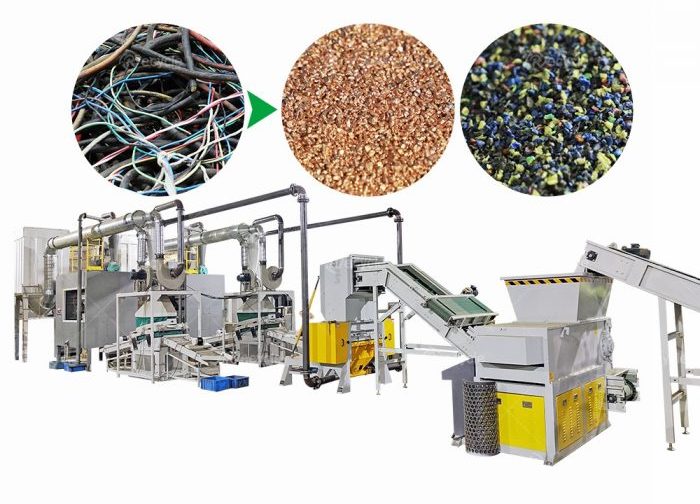
Advantages of the Modern Dry Process
Dry-type wire recycling lines use clean mechanical shearing, pneumatic airflow, and electrostatic fields:
Zero Water Consumption: Eliminates sludge generation, plumbing maintenance, and wastewater disposal costs.
Dry, Ready-to-Ship Products: Copper granules leave the line completely dry, eliminating the need for downstream drying ovens and preventing surface oxidation that can lower the metal’s selling grade.
Pristine Plastic Granules: Plastic insulation (PVC, PE) remains clean and moisture-free, making it immediately suitable for sale to plastic compounding and molding plants.
By eliminating wet sludge handling while keeping copper recovery above 99%, dry recycling lines offer a cleaner, simpler, and more compliant operational footprint.