
Why Automation Is Transforming the Battery Recycling Industry
For recycling companies, this is both a challenge and a business opportunity. However, processing used batteries safely is far more complicated than recycling ordinary scrap metal. Batteries contain valuable materials such as copper, aluminum, black mass, graphite, and lithium compounds, but they also present risks including fire, thermal runaway, and hazardous dust. This is why professional battery recycling lines have become the preferred solution for modern recycling plants.
Unlike simple crushing equipment, a complete battery recycling line is designed as an integrated processing system. Each stage works together to maximize material recovery while maintaining operational safety.The process usually begins with battery discharge and feeding. Proper pretreatment helps reduce safety risks before mechanical processing starts.
The batteries then pass through stages of shredding and crushing, during which the outer casing is broken and the internal materials are released. Instead of relying on excessive crushing force, modern systems focus on controlled size reduction to improve downstream separation efficiency.
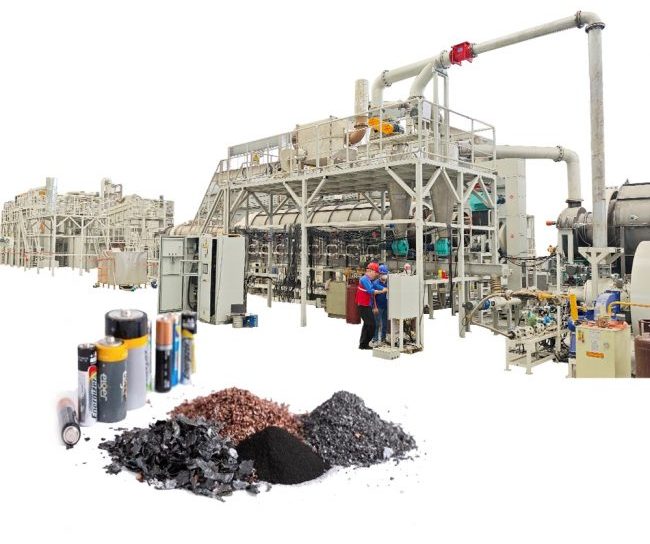
Once materials are liberated, multiple separation technologies work together to recover valuable resources.
Magnetic separators remove ferrous metals.
Air classification separates lightweight materials.
Vibrating screens classify different particle sizes.
Advanced systems may also include gravity separation or airflow sorting to improve black mass recovery.
One of the biggest advantages of an automated battery recycling line is recovery consistency.
Manual dismantling often depends on worker experience and produces inconsistent results. Automated systems maintain stable processing conditions throughout long production cycles, improving both recovery rates and production efficiency.
Another major benefit is environmental protection.
Battery recycling generates fine dust and potentially hazardous particles. High-quality recycling lines integrate dust collection, negative-pressure systems, and sealed conveying equipment to improve workplace safety while meeting environmental regulations.
Automation also reduces labor costs.
Instead of relying on large dismantling teams, operators supervise the equipment through centralized control systems, allowing higher production with fewer workers.
As governments worldwide introduce stricter battery recycling regulations, investing in a reliable battery recycling line is becoming a strategic decision rather than simply an equipment purchase.
A professionally designed recycling system allows companies to recover valuable materials, reduce operating risks, and build a sustainable recycling business.