
Turnkey Small Household Appliance Recycling Line
-
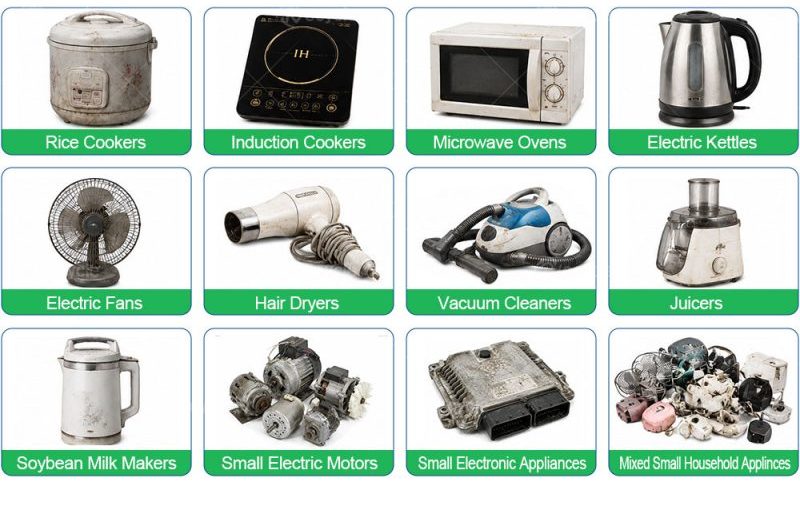
Applicable Materials: End-of-life (EOL) small household appliances (Category 2 & 5 WEEE), mixed electronic scrap, small electric motors, and defective consumer electronics (such as rice cookers, induction cookers, microwave ovens, electric kettles, fans, hair dryers, vacuum cleaners, and juicers).
-
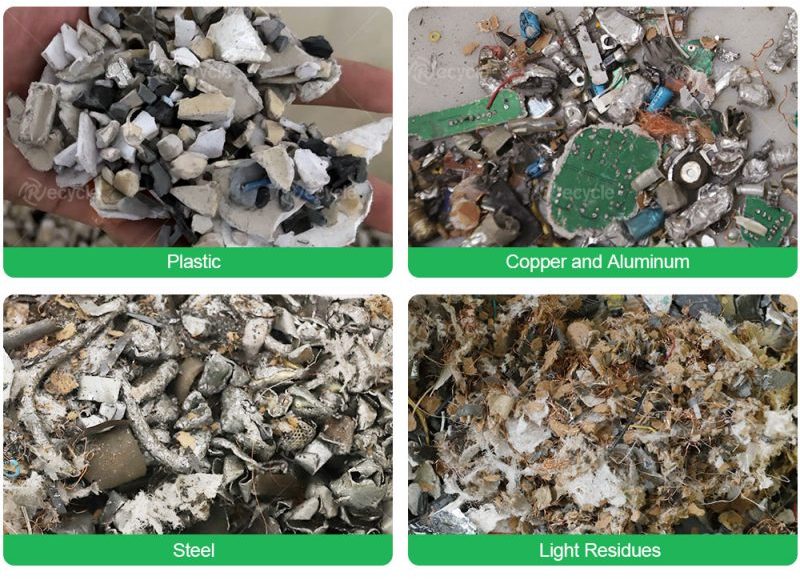
Final Products: Clean ferrous metals (iron/steel scrap), high-purity copper granules, aluminum flakes, stainless steel fragments, and recyclable mixed plastic particles (ABS/PS/PP)
E-mail: recyclemachinehall@gmail.com
Overview
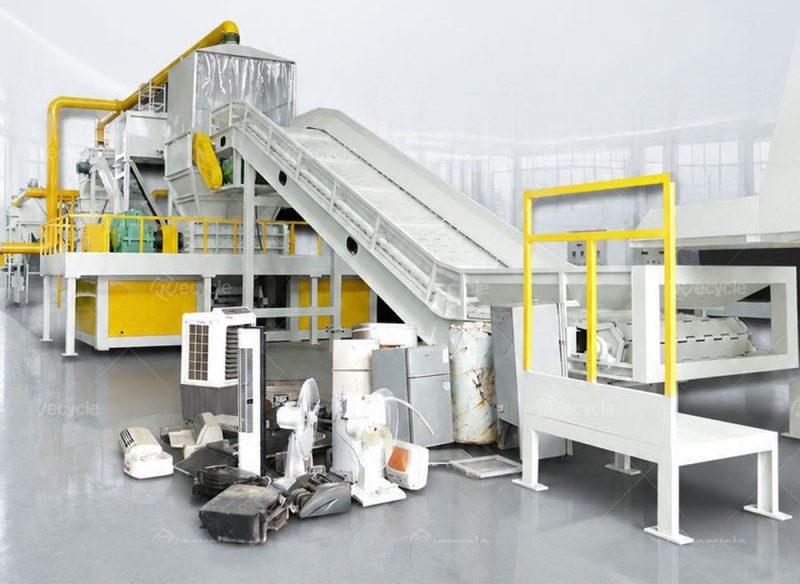
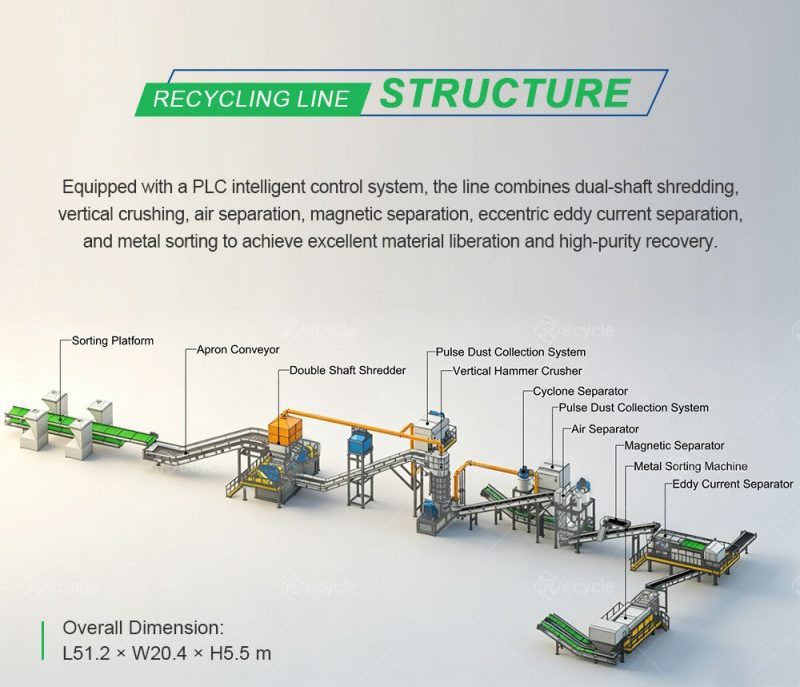
The Small Household Appliance Recycling Line is an industrial-scale, automated solution engineered for processing end-of-life mixed small household appliances. Equipped with an advanced PLC intelligent control system, the production line combines multi-stage processing: initial manual sorting, heavy-duty double-shaft shredding, vertical hammer crushing, two-stage pulse-jet dust collection, cyclone air separation, magnetic separation, eccentric eddy current separation, and precision sensor-based metal sorting. The line efficiently liberates and recovers high-purity iron, copper, aluminum, stainless steel, and mixed plastics while maintaining a dust-controlled, low-emission workshop environment.
Application
Applicable Feedstocks & Recovery Yields
Applicable Feedstocks
- Kitchen Electronics: Rice cookers, induction cookers, microwave ovens, electric kettles, juicers, soybean milk makers.
- Living & Personal Care Devices: Electric fans, hair dryers, vacuum cleaners.
- Motors & Electronic Modules: Small electric motors, small electronic appliances, and assorted mixed small household scrap.
Recovered High-Purity Fractions
- Ferrous Metals (Iron / Steel): Over 99% purity, directly salable to steel mills.
- Non-Ferrous Metals (Copper & Aluminum): Clean granule and fragment streams (>96–98% purity) with zero tangled wires.
- Stainless Steel: Separated through high-sensitivity metal sorting, preventing contamination in downstream plastics.
- Clean Plastics (ABS, PS, PP): Liberated from metal inserts, ready for compounding, washing, or optical polymer sorting.
Advantages
Core Engineering Advantages
- Dual-Stage Size Reduction for 99%+ Liberation: A double-shaft shredder and vertical hammer crusher prevent plastic-metal binding, breaking open intricate small electric motors and welded appliance bodies.
- Dedicated Stainless Steel Recovery: Unlike lines that only sort ferrous and non-ferrous streams, the dedicated metal sorting machine extracts stainless steel, eliminating metal carryover into plastic streams.
- Advanced Eccentric Rotor Technology: The eccentric eddy current rotor targets the discharge point, protects the belt from iron overheating, and maximizes copper/aluminum rejection accuracy.
- Dual Pulse-Jet Emission Control: Equipped with dual pulse dust collectors and a cyclone separator, the system captures particulates directly at dust generation points, complying with OSHA and European emissions standards.
- Smart PLC Automation: Fully interlocked production logic with automatic motor reversal during overload scenarios ensures continuous, unattended operation.
Technical Parameters
| Model | RSKHA-20 | RSKHA-40 | RSKHA-60 | RSKHA-80 |
| Power (kW) | 176 kW | 275 kW | 500 kW | 680 kW |
| Capacity (Sets/h) | 20–40 | 40–60 | 60–80 | 80–100 |
FAQ
Q1: How does the vertical hammer crusher differ from a standard secondary granulator?
A: Unlike knife granulators that wear rapidly, the vertical hammer crusher uses high-speed impact to beat materials, stripping plastic coatings and liberating copper wires from motors while shaping metals into dense pellets for higher sorting efficiency.
Q2: Can this plant extract non-magnetic stainless steel parts from appliances?
A: Yes. A dedicated sensor-based metal sorting machine follows the eddy current stage to accurately eject non-magnetic stainless steel, preventing contamination in recovered plastics.
Q3: What are the workshop space and height requirements for this line?
A: The standard layout requires 51.2 m × 20.4 m with a minimum height of 5.5 m. We also design custom L-shaped or U-shaped configurations to match your facility.
Q4: How does the system handle dust and airborne fibers during operation?
A: All shredding and transfer sections operate under negative pressure, supported by a cyclone separator and two pulse-jet baghouse collectors to capture dust, labels, and fibers.
Q5: Is the electrical control panel compliant with US and European safety standards?
A: Yes. The line is CE-certified, with options for UL508A-certified control panels, NEMA-rated enclosures, and CSA-compliant motors for North America.