
Five Things Investors Should Know Before Building a Biomass Waste-to-Charcoal Production Plant
Many companies enter the biomass charcoal business with a simple idea: find cheap agricultural waste, install a carbonization machine, and start producing charcoal. On paper, the business model looks straightforward. Biomass is widely available, charcoal has stable demand, and waste materials can be transformed into a valuable product.
However, after working with customers from different regions, we have found that the success or failure of a biomass waste-to-charcoal project is rarely decided by the equipment alone. In many cases, the problems appear before the production line is even installed.
The companies that achieve stable production usually spend more time understanding their raw materials, market requirements, and operating conditions before purchasing equipment. New investors often overlook the following five points, but they can directly influence the long-term performance of a biomass charcoal production plant.
The Cheapest Raw Material Is Not Always the Best Choice
One of the first questions investors ask is usually: “What biomass material can reduce my production cost?”
Low-cost raw materials are certainly attractive, but price is only one part of the calculation. Different biomass materials behave differently during carbonization. A material that seems inexpensive may require additional drying, crushing, or processing before it can enter the production line.
For example, freshly collected agricultural waste may contain high moisture. Although the material itself costs little, removing excess water requires additional energy and equipment. In contrast, some dry biomass residues may have a higher purchase price but provide better carbonization efficiency and more stable output.
Before designing a biomass waste-to-charcoal production system, it is important to evaluate several factors:
moisture content of the material
particle size and physical structure
seasonal availability
transportation distance
expected charcoal quality
A successful project does not simply choose the cheapest waste. It chooses the material that creates the best balance between supply stability and processing cost.
Production Capacity Should Match Real Market Demand
Another common mistake is focusing too much on maximum output.
A large production line may look attractive because higher capacity usually means higher revenue potential. However, production volume only creates value when there is enough raw material supply and a reliable market for the final product.
We have seen projects where customers planned large facilities based on future expectations but underestimated daily operating challenges. After installation, the equipment was running below capacity because the local biomass supply could not support continuous production.
A more practical approach is to start with a realistic production plan. The equipment should match current raw material availability while allowing room for future expansion.
This is also why professional manufacturers usually discuss the complete project situation before recommending a biomass carbonization solution. The right equipment is not always the biggest one—it is the one that fits the customer’s actual conditions.
Carbonization Quality Depends on Process Control
Many new investors believe that producing charcoal only requires heating biomass until it becomes black. In reality, commercial biochar production requires much more precise control.
Temperature changes, heating time, and material movement all influence the final product. If the process is unstable, one batch may have completely different characteristics from the next batch. This creates difficulties when selling to customers who require consistent quality.
For industrial production, stability is often more valuable than occasional high output.
A continuous carbonization system helps solve this challenge by allowing biomass to move through controlled processing stages. Instead of relying heavily on manual judgment, the production process can maintain more consistent operating conditions.
This is especially important for companies producing biochar for applications such as soil improvement, activated carbon production, industrial fuel, or other commercial uses where product standards matter.
Energy Efficiency Influences Long-Term Profit
When calculating investment costs, many buyers focus on the purchase price of the equipment but underestimate daily operating expenses.
Energy consumption is one of the most important factors affecting profitability. A carbonization system that requires large amounts of external fuel may reduce profit margins even if the initial equipment cost is lower.
Modern biomass carbonization technology focuses on improving energy utilization. During the carbonization process, combustible gases generated from biomass can be collected and reused as a heating source. This reduces dependence on additional fuel and improves overall efficiency.
For long-term operation, a slightly higher initial investment in an efficient system can often provide better returns through lower running costs.
Equipment Design Should Consider Future Expansion
A biomass recycling project rarely remains unchanged for many years. Raw material sources may expand, customer requirements may change, and production targets may increase.
Because of this, flexibility should be considered during the initial equipment selection stage.
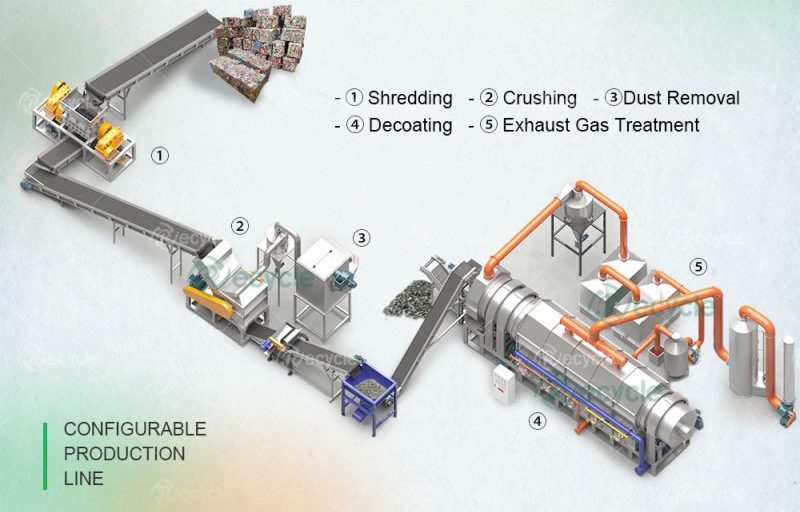
At Henan Recycle Environmental Protection Equipment Co., Ltd., we develop biomass carbonization solutions tailored to each customer’s specific production conditions. Our continuous carbonization furnace can be combined with supporting equipment such as biomass crushers, dryers, conveyors, cooling systems, and gas treatment units to create a complete production line.
Instead of providing a standard machine only, our engineering team evaluates factors including feedstock characteristics, required capacity, and local operating conditions to help customers build a more suitable biomass waste-to-charcoal production system.