
Electric Motor Stator Recycling Process: Step-by-Step Guide
Discarded electric motors are found in many industries, including automotive repair, manufacturing, household appliance disposal, and industrial equipment replacement. Although these motors may appear useless after reaching the end of their service life, they contain valuable materials such as copper, steel, and aluminum.
A well-designed electric motor stator recycling process can turn mixed waste motors into clean recyclable materials. However, successful recycling depends on more than simply removing copper from motors. The entire process, from material preparation to final separation, affects recovery efficiency and profitability.
Preparing Waste Motors Before Recycling
The first step in motor recycling is not dismantling—it is sorting.
Waste motors often come from different sources and may vary greatly in size, structure, and material composition. Motors from washing machines, industrial equipment, pumps, and vehicles all have different designs. Processing them together without preparation can reduce efficiency and increase equipment wear.
Professional recycling facilities usually classify motors according to size, type, and processing requirements. This allows operators to select suitable processing methods and improve the consistency of the final output.
Before entering the recycling system, external parts such as plastic covers, cables, or unnecessary attachments may need to be removed. Proper preparation helps the following stages operate more smoothly.
Separating the Stator from the Motor Housing
The stator is one of the most valuable parts of an electric motor because it contains copper winding surrounded by a steel core. Recovering this component efficiently is a key stage in the recycling process.
Traditional manual dismantling requires workers to cut the motor casing and remove internal parts using hand tools. While this method can handle small quantities, it becomes inefficient when processing large volumes of motors.
For industrial recycling operations, dedicated stator dismantling equipment provides a faster and more stable solution. The machine is designed to separate the stator while minimizing unnecessary damage to valuable materials.
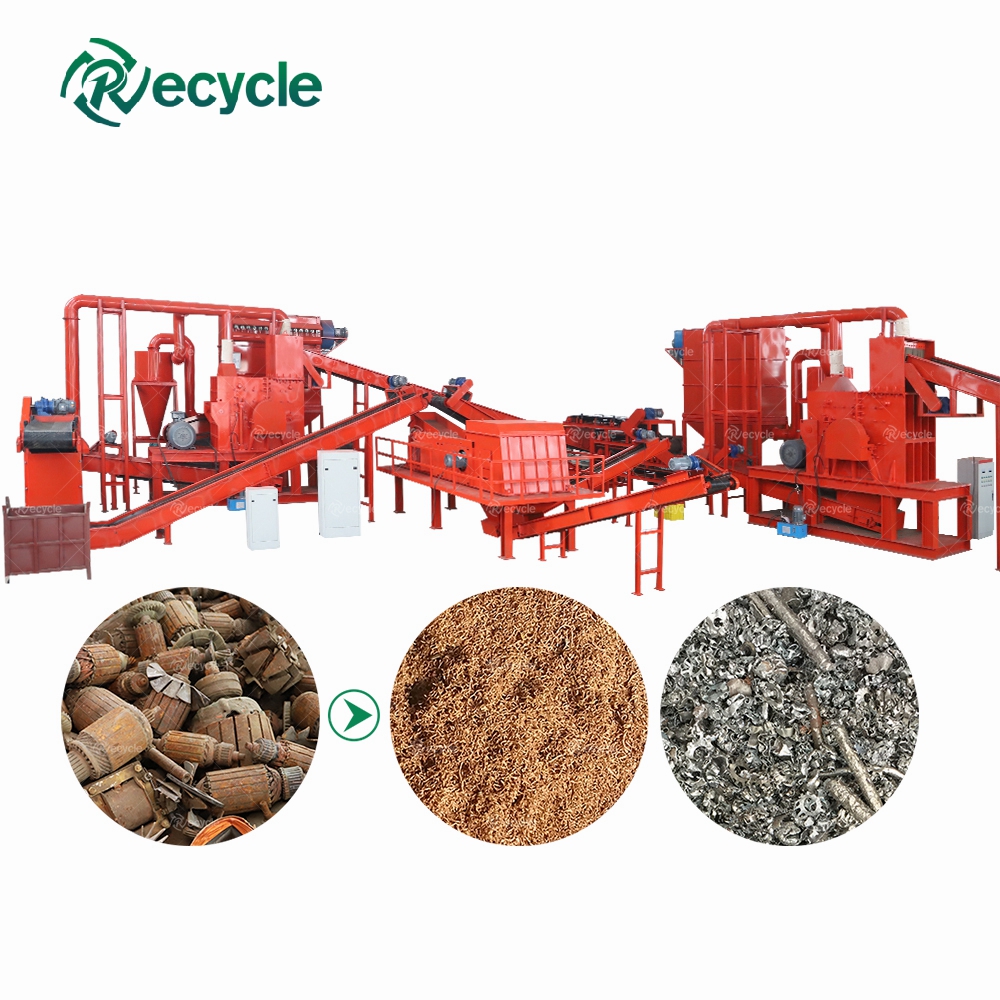
At Henan Recycle Environmental Protection Equipment Co., Ltd., our electric motor stator recycling equipment is developed for processing different types of waste motors. The system can be customized based on motor size, production capacity, and customer requirements, helping recycling companies improve efficiency while reducing manual workload.
Recovering Copper and Other Valuable Materials
After the stator is separated, the next objective is recovering reusable materials.
Copper winding from motors has significant recycling value, but the recovery quality depends on how effectively it is separated from insulation materials and steel components. A well-designed process allows copper, iron, and aluminum to be collected separately, improving their resale value.
In larger recycling plants, stator processing can be combined with additional equipment for crushing, sorting, and metal separation. This creates a more complete recycling solution instead of relying on a single dismantling step.
Why Process Design Matters for Motor Recycling Businesses
Many new recyclers focus only on equipment price when planning a motor recycling project. However, long-term profitability depends on the entire process.
Factors such as motor supply, daily processing volume, labor costs, and material recovery targets should all be considered before choosing a recycling system.
A suitable electric motor stator recycling process helps companies reduce unnecessary labor, improve material recovery rates, and create a more stable production model.
With increasing demand for recycled copper and steel, efficient motor recycling technology provides an opportunity for businesses to turn discarded equipment into valuable secondary resources. By choosing the right processing method and reliable equipment, waste motors can become an important source of sustainable materials.