
How an Aluminum Plastic Recycling Plant Works
For recycling companies, the main difficulty is not collecting aluminum-plastic waste. The real challenge is achieving efficient separation while maintaining the quality of both recovered materials.
An aluminum-plastic recycling plant is designed to solve this problem by combining several processing stages into one complete system. Instead of treating composite waste as a low-value material, the plant transforms it into reusable aluminum and plastic products.
Why Aluminum Plastic Recycling Requires Specialized Processing
Unlike single-material waste, aluminum plastic composites are made by bonding different materials together. Aluminum provides strength and barrier properties, while plastic offers flexibility and protection. This combination makes the material useful during production but difficult to separate after disposal.
Simple crushing methods cannot create high-quality recycled materials because aluminum and plastic remain mixed together. Manual separation is also inefficient due to the large amount of labor required.
A professional recycling system uses mechanical processing technology to gradually release and separate different materials. The goal is not only to break the waste into smaller pieces but also to maximize material recovery.
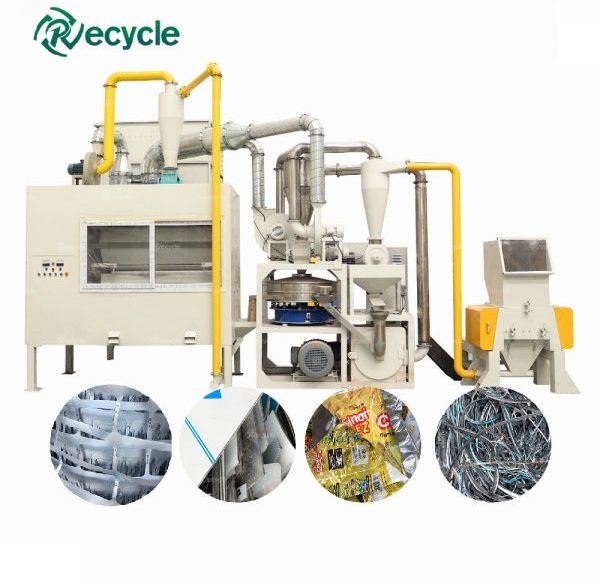
The Process Behind an Aluminum Plastic Recycling Plant
The recycling process usually begins with size reduction. Large pieces of aluminum plastic waste are processed by crushing or shredding equipment to make the material suitable for further separation.
After crushing, the mixed materials enter separation stages where aluminum and plastic are recovered independently. Depending on the material characteristics, different technologies can be applied to improve separation efficiency.
The final result is clean aluminum particles and reusable plastic materials. These recovered materials can be sold directly or used as secondary raw materials in manufacturing industries.
A well-designed production line focuses on maintaining material quality throughout the process. Excessive damage to aluminum or plastic may reduce their commercial value, so equipment selection and process adjustment are both important.
Building a Recycling System Based on Real Material Conditions
One of the biggest mistakes when planning an aluminum-plastic recycling project is choosing equipment only based on production capacity.
Different waste sources create different challenges. Aluminum-plastic panels, pharmaceutical packaging, and composite sheets have different structures and require different processing approaches.
At Henan Recycle Environmental Protection Equipment Co., Ltd., we provide customized aluminum-plastic recycling plants according to customers’ raw materials, processing capacity, and final product requirements. Our solutions can include shredders, crushers, separation equipment, conveyors, and other supporting systems to create a complete recycling process.
Before designing a project, our engineers analyze factors such as material composition, moisture level, and expected output quality. This helps customers avoid unnecessary investment and achieve more stable operation after installation.