
Copper Aluminum Radiator Recycling Line
For many scrap recycling businesses, discarded radiators are not simply waste metal. Inside these used heat exchangers are valuable copper, aluminum, and other recyclable materials that can generate additional income when processed correctly.
However, radiator recycling is not as simple as separating common scrap metals. Copper and aluminum are tightly combined together during manufacturing, which makes manual sorting inefficient and time-consuming. For companies handling large quantities of waste radiators, the biggest challenge is finding a method that can recover valuable metals while keeping operating costs under control.
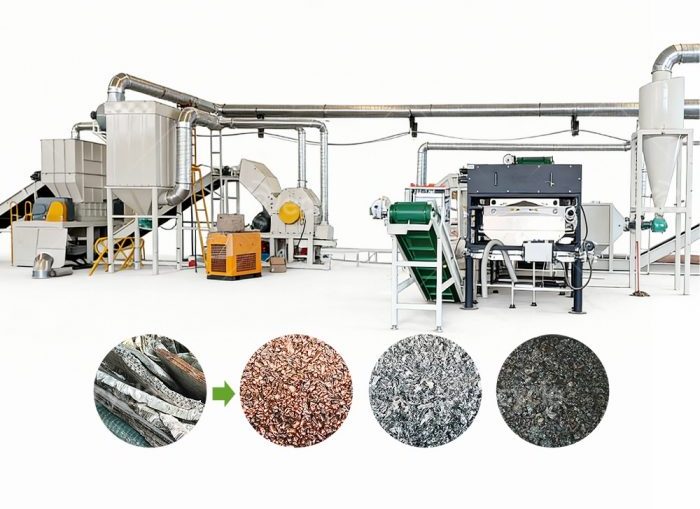
This is where a copper aluminum radiator recycling line becomes an important solution for modern metal recycling businesses.
Why Radiator Recycling Has Growing Market Value
Radiators are widely used in automobiles, air conditioning systems, industrial equipment, and refrigeration units. As vehicle replacement rates increase and electronic equipment continues to be upgraded, the amount of discarded radiators entering the waste stream is also growing.
Although the size of each radiator may not seem significant, the combined value of recovered copper and aluminum can be considerable when processing large volumes.
The difficulty comes from the structure of the material. A typical radiator contains thin copper or aluminum tubes combined with metal fins. Separating these materials manually requires time and labor, while improper processing can reduce the quality of recovered metals.
A professional recycling system helps businesses handle this challenge more efficiently.
How a Copper Aluminum Radiator Recycling Line Improves Recovery
A complete radiator recycling line is designed to transform mixed radiator scrap into separated metal resources through multiple processing stages.
The process usually begins with preparation, where unwanted attachments and impurities are removed. The radiator material is then processed through specialized crushing and separation equipment to release the copper and aluminum components.
After size reduction, separation technology is used to collect different metals. The final output is cleaner copper and aluminum materials that can be directly supplied to metal processing companies.
Compared with manual dismantling, mechanical processing provides more stable production capacity and reduces dependence on labor. This is especially valuable for recycling companies that need to process large amounts of radiator scrap every day.
Factors That Affect Recycling Profitability
Many investors focus only on metal prices when evaluating radiator recycling projects. However, actual profitability depends on several factors working together.
The quality of incoming materials, processing efficiency, energy consumption, labor costs, and equipment maintenance all influence final returns.
For example, a recycling line with high output but poor separation quality may generate less profit because recovered materials have lower market value. On the other hand, an efficient system can maximize metal recovery and reduce unnecessary losses.
Therefore, choosing equipment based on real material conditions is more important than simply selecting the largest machine.
Customized Radiator Recycling Solutions from Henan Recycle
At Henan Recycle Environmental Protection Equipment Co., Ltd., we provide copper aluminum radiator recycling solutions designed for different types of scrap materials.
Our radiator recycling lines can be configured with shredding, crushing, sorting, and separation equipment according to customer requirements. Whether processing automobile radiators, air conditioning radiators, or mixed copper aluminum scrap, the system can be adjusted based on production capacity and final recovery targets.