
More News

How to Build an Efficient Tire Recycling System
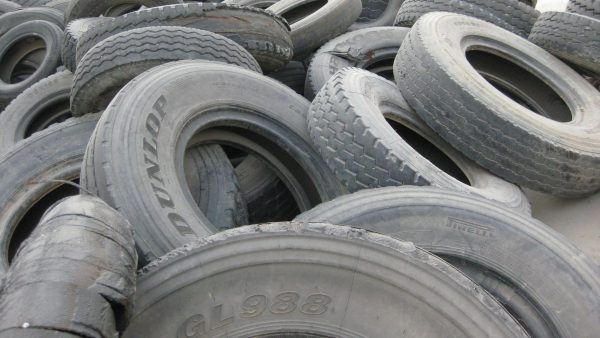
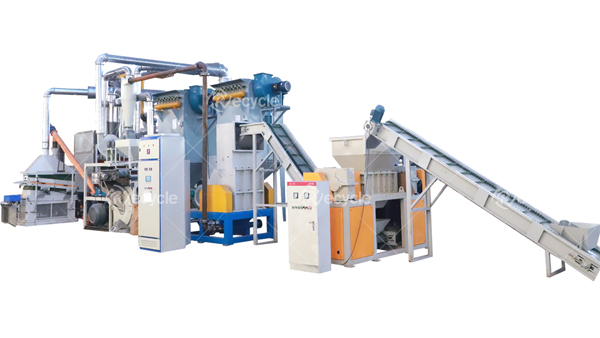
Processing waste tires on a commercial scale requires more than a powerful shredder. Tires have a composite structure made from rubber, steel wire, and textile materials, so an efficient recycling project needs several processing stages. A complete waste tire recycling line connects these stages into one continuous system for size reduction, material separation, and product preparation.
One of the first decisions when planning a tire recycling project is the required final material. Some operators only need shredded tire chips for further processing, while others want clean rubber granules or fine rubber powder. These goals determine how many processing stages are needed and how the equipment should be arranged.
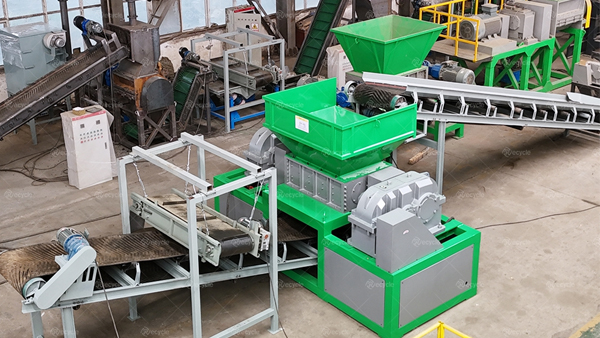
Whole tires are generally introduced into the line through a feeding system. A heavy-duty shredder then breaks the tires into manageable pieces. Compared with manual cutting or low-capacity processing, mechanical shredding allows a larger volume of tires to enter the recycling system continuously.
The shredded material still contains steel and textile components. For this reason, the next stages focus on separation. Magnetic separators can extract ferrous steel from the rubber mixture. Depending on the design, magnetic separation can be performed at different points in the production line to improve metal recovery and protect downstream equipment.
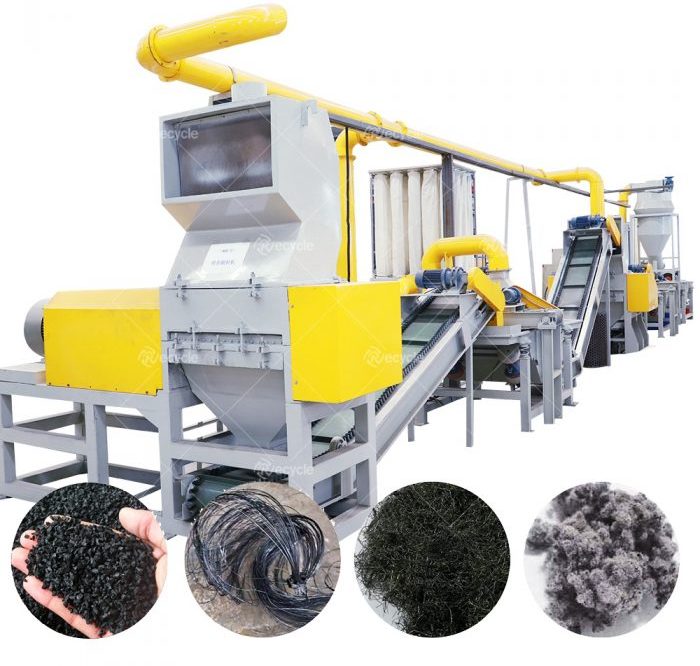
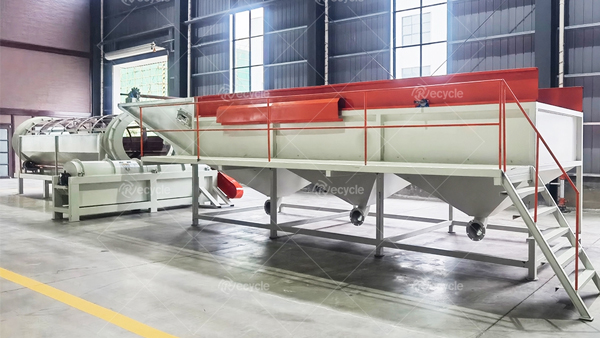
The rubber fraction can then enter a granulation section. A granulator or rubber crusher reduces the material to a controlled particle size. Screening equipment separates different fractions and sends oversized pieces back for additional processing. This approach creates a more stable output and allows the same line to produce different rubber sizes by changing the screening configuration.
For applications requiring cleaner rubber, fiber removal becomes particularly important. Tire textiles can interfere with the quality of recovered rubber and may affect its suitability for certain downstream applications. Air separation or other fiber-removal equipment can therefore be incorporated into the system to improve material purity.
A complete system can also include fine grinding when rubber powder is required. Fine grinding is more demanding than ordinary tire shredding because the material must be processed to a much smaller size. The grinding section should therefore be selected according to the required powder specification rather than simply maximizing machine capacity.
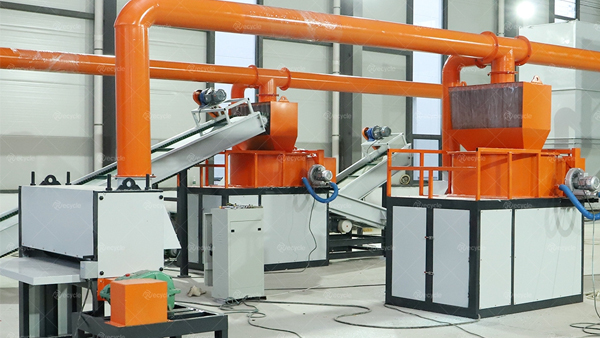
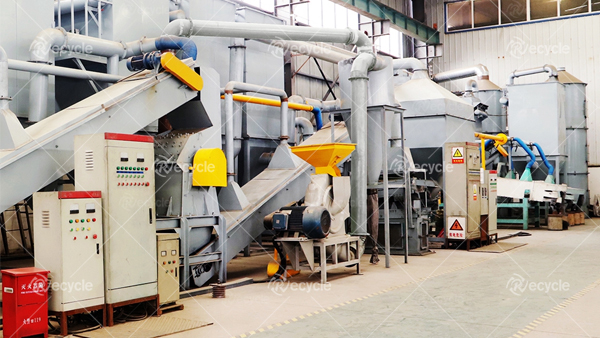
Dust management should also be considered during plant design. Tire processing generates rubber particles and fine dust, particularly during granulation and grinding. An appropriate dust collection system can help maintain a cleaner working environment and reduce the spread of airborne particles around the production area.
Another important factor is automation. A larger recycling plant may include conveyors, automatic feeding, magnetic separation, screening, and centralized electrical control. Coordinating these components reduces unnecessary manual handling and makes it easier for operators to monitor the material flow.
The final configuration should always be based on the actual feedstock. Passenger tires, truck tires, off-road tires, and agricultural tires can have significant differences in size, construction, and steel content. A line designed around one tire category may not provide the same performance when used with another type of feedstock.