
UBC Pyrolysis Decoating: Improving the Quality of Recycled Aluminum
Used beverage cans (UBC) are an important source of secondary aluminum. However, collected cans typically contain printed inks, paint, protective coatings, and other organic residues. If these materials are not properly managed during recycling, they can affect furnace operation, increase emissions-control requirements, and complicate the production of recycled aluminum.
UBC pyrolysis decoating provides a thermal treatment solution for removing organic coatings before aluminum melting. By controlling the heating process under suitable operating conditions, recycling facilities can prepare scrap cans for more efficient downstream recovery.
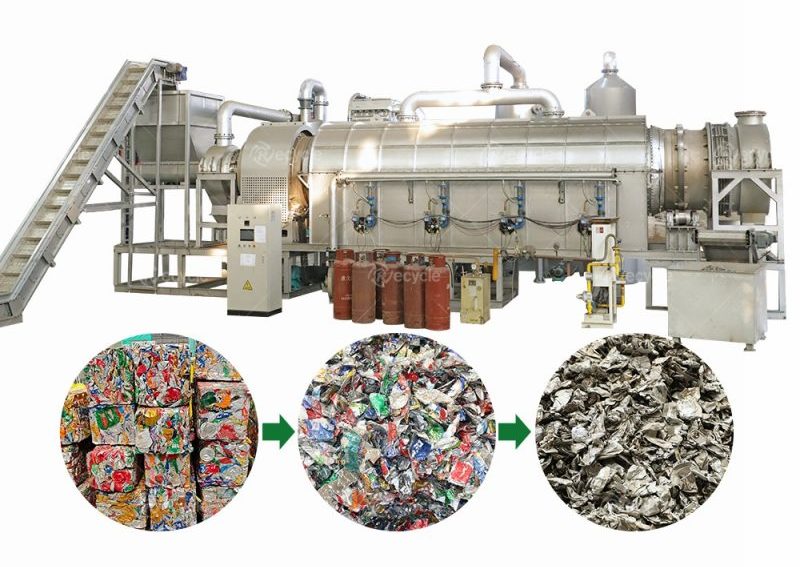
Why Is Decoating Important in UBC Recycling?
Aluminum beverage cans are lightweight and widely recyclable, but their surface coatings must be considered during processing. Directly melting coated scrap can introduce organic contaminants into the furnace process and increase the amount of combustion products that must be managed.
A dedicated decoating stage helps reduce the organic coating load before melting. This can support more stable furnace operation and improve the suitability of the prepared scrap for subsequent recycling. The actual benefits depend on the incoming can quality, coating composition, treatment conditions, and the requirements of the aluminum melting process.
How Does a UBC Pyrolysis Decoating System Work?
A typical UBC recycling process begins with the collection and preparation of used beverage cans. Depending on the plant configuration, the cans may be sorted, crushed or shredded, and transferred to a thermal treatment unit.
During pyrolysis decoating, the prepared material is heated in a controlled, oxygen-limited environment. Organic coatings decompose into gases and other by-products rather than simply being burned in an uncontrolled open-air process. The resulting process gases must be handled by an appropriately designed gas treatment and emissions-control system.
A typical processing sequence includes:
Feed preparation: Removes unsuitable contaminants and prepares the cans for thermal treatment.
Thermal decoating: Applies controlled heat to decompose paint, inks, and other organic coatings.
Off-gas treatment: Manages process gases and supports compliance with applicable environmental requirements.
Cooling and discharge: Brings treated aluminum to suitable conditions for subsequent handling.
Melting and refining: Transfers the prepared scrap to the appropriate downstream aluminum recycling process.
The exact arrangement depends on feedstock size, required throughput, and plant design.
What Determines Decoating Performance?
Temperature control, residence time, material distribution, and the composition of the coatings all influence the treatment result. Excessive or poorly controlled heating may cause unwanted oxidation or reduce process efficiency, while insufficient treatment can leave residual organic material on the scrap.
Equipment selection should therefore consider more than nominal capacity. Buyers should also evaluate temperature-control accuracy, energy consumption, thermal insulation, process-gas handling, maintenance access, and the compatibility of the treated output with their melting furnace.
A complete solution should address both aluminum recovery and environmental protection. Thermal treatment does not eliminate the need for appropriate emissions control, and the gas-treatment configuration must be designed for the actual process gases generated.
How Pyrolysis Decoating Supports Aluminum Recovery
For recycling facilities processing large quantities of used beverage cans, decoating can be an important step in improving feedstock preparation. Cleaner, properly treated scrap can help downstream operations manage the challenges associated with coatings and organic residues.
However, decoating alone does not guarantee a particular metal recovery rate or final aluminum purity. Sorting efficiency, contamination, metal losses, furnace conditions, and refining practices remain important factors.
FAQ:
- What does UBC pyrolysis decoating remove?
It is designed to decompose organic surface coatings, including many paints, printing inks, and protective coatings found on used beverage cans.
- Is pyrolysis the same as direct incineration?
No. Pyrolysis generally uses an oxygen-limited environment to thermally decompose organic materials. The process and its off-gas treatment system must be designed for the specific application.
- Can the treated cans be melted directly?
The treated material may be suitable for subsequent melting, subject to its condition and the requirements of the receiving furnace. Cooling, inspection, and additional preparation may be needed.
For aluminum recyclers, UBC pyrolysis decoating is not simply a heating operation. It is a feedstock-preparation stage that must balance coating removal, metal preservation, energy efficiency, and emissions control to support a more effective recycling process.