
Waste Refrigerator & Freezer Cabinet Recycling Plant
End-of-life refrigerators and freezers contain several recyclable materials, including steel cabinets, aluminum components, copper-bearing parts, plastics, and insulating foam. Recovering these materials requires more than simply crushing the appliances.
Refrigerators and freezers may also contain refrigerants, compressor oils, electrical components, and insulation materials that require appropriate handling. A properly designed waste refrigerator and freezer cabinet recycling plant therefore combines safe preparation, mechanical size reduction, material separation, and environmental controls.
For recycling companies, the objective is to recover valuable materials while managing hazardous substances and maintaining a stable processing flow.
Why Is Refrigerator Recycling Different from General Appliance Shredding?
Refrigerators and freezers are bulky products with multiple material layers. Their outer cabinets, internal liners, insulation foam, compressors, and electrical components behave differently during processing.
The insulation between the cabinet walls presents a particular challenge. Depending on the appliance design, the foam may contain blowing agents that require controlled handling. Refrigerants in the cooling circuit must also be recovered using appropriate procedures before the appliance enters a process that could release them.
For this reason, a refrigerator recycling plant generally needs a defined preparation stage before mechanical cabinet processing.
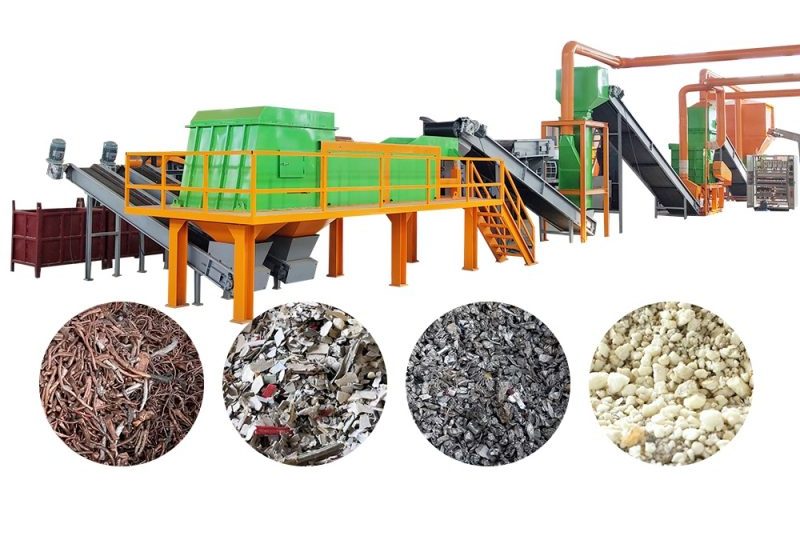
How Does a Refrigerator and Freezer Recycling Plant Operate?
A typical recycling line may be divided into several stages according to local regulations, appliance types, and the plant’s automation level.
1. Appliance inspection and preliminary treatment
Incoming refrigerators and freezers are inspected. Reusable components or unsuitable items may be removed, and the appliances are directed to the appropriate processing route.
2. Refrigerant and compressor oil recovery
Qualified personnel and suitable equipment recover refrigerants and manage compressor oils in accordance with applicable environmental requirements. This operation is essential before processing steps that could damage the cooling circuit.
3. Cabinet preparation and size reduction
Prepared appliances are fed into suitable shredding or cabinet-processing equipment. The machinery reduces bulky structures into smaller pieces that can be handled by downstream separation systems.
4. Foam and material separation
The processing line separates insulation foam from metal and other recoverable fractions as appropriate. The required technology depends on the cabinet construction, foam type, and whether the process uses dedicated cabinet treatment or a more integrated shredding system.
5. Metal and plastic recovery
Magnetic separation can recover suitable ferrous metal fractions, while additional separation technologies may be used for non-ferrous metals and plastics. The exact arrangement depends on the desired output quality and the material composition.
6. Collection and downstream treatment
Recovered steel, non-ferrous metals, plastics, and foam are collected separately for appropriate recycling or further processing. Residual materials must be managed according to their composition and applicable regulations.
What Equipment Is Needed?
The equipment configuration should reflect the processing capacity, appliance dimensions, and level of automation required. A plant may include refrigerant recovery equipment, compressor handling stations, cabinet shredders, foam separation systems, conveyors, magnetic separators, and non-ferrous material separation equipment.
Dust extraction and appropriate emissions controls may also be necessary, particularly when processing insulation foam or other materials that can release airborne particles or process gases.
Not every plant requires the same equipment arrangement. Some operations use dedicated cabinet-processing systems, while others integrate several stages into a larger appliance recycling line.
How to Evaluate a Refrigerator Recycling Plant
When comparing suppliers, buyers should look beyond the number of appliances processed per hour. Important factors include the range of refrigerator and freezer sizes accepted, the method used for refrigerant recovery, the handling of insulation foam, and the quality of the recovered material streams.
Other considerations include:
Processing capacity: Evaluate the actual appliance mix, including different cabinet sizes and designs.
Automation level: Determine which steps require manual intervention and which are mechanically integrated.
Environmental controls: Review refrigerant management, foam handling, dust collection, and applicable emissions requirements.
Material recovery: Confirm the expected output fractions and how their quality will be assessed.
Maintenance and safety: Examine access to wear parts, equipment guarding, operator training, and service requirements.
A complete proposal should explain the material flow from appliance receiving through final collection, including how hazardous substances are managed.
What Determines the Value of Recovered Materials?
The economic performance of a refrigerator and freezer cabinet recycling plant depends on the number and type of appliances processed, the metal content, separation efficiency, labor, energy use, maintenance, and the local market for recovered materials.
Steel is often a major recovered fraction, while copper, aluminum, and selected plastics may provide additional value. However, the actual quantities and grades vary by appliance model and age.
Foam and residual fractions should not be assumed to have a profitable recycling outlet in every market. Their treatment costs and disposal requirements must be included in the investment assessment.