
Challenge of Liberating Tempered Glass from Ethylene-Vinyl Acetate
In a decommissioned photovoltaic module, the tempered glass sheet is adhered to the underlying solar cells through cross-linked Ethylene-Vinyl Acetate (EVA). This copolymer bond is engineered to withstand 30 years of extreme ultraviolet exposure, moisture, and thermal cycling. Trying to pry or violently crush this composite with standard industrial grinders pulverizes the glass into the polymer matrix, rendering both materials unmarketable. A specialized solar PV glass removal machine provides the mechanical and thermal control required to peel this bond cleanly.
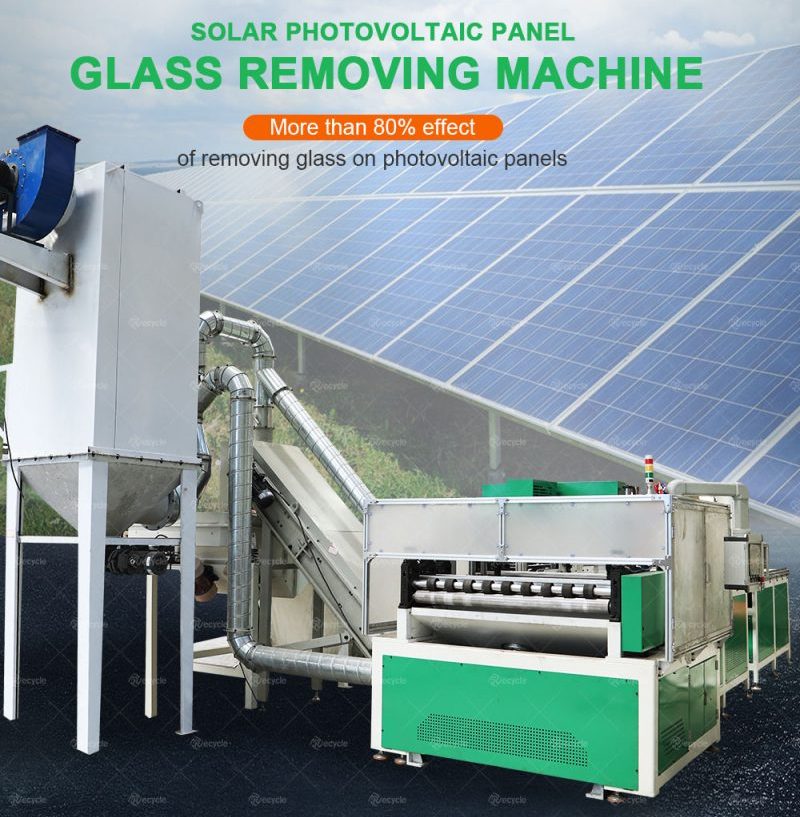
Mechanical Scraping vs. Heated Blade Separation
Commercial glass removal systems employ two primary engineering approaches depending on the targeted end-use of the glass:
Heated Wave-Blade Delamination: The module travels over an induction-heated platen that warms the internal EVA layer to its softening threshold, typically between 120°C and 150°C. An ultra-thin, reciprocating heated blade shears directly along the microscopic boundary between the glass surface and the polymer sheet. This preserves the tempered glass as large, cohesive sheets or large cullet with virtually zero organic residue.
Differential Roller Grinding (Surface Shattering): For installations prioritizing high throughput over intact glass recovery, high-hardness alloy rollers apply micro-calibrated torsional pressure across the glass face. This breaks the surface tension and shatters the brittle glass into uniform 2–5 mm granules. The loosened cullet is brushed away from the ductile, stretchable EVA sheet via high-torque nylon-wire rotary brushes and evacuated into negative-pressure cyclone collectors.
Safeguarding Value in the Secondary Glass Market
Recovered photovoltaic glass holds low iron concentrations, making it a premium feedstock for flat glass manufacturers, fiberglass production, and reflective road paints. However, secondary buyers reject cullet batches containing more than 0.5% organic polymer impurities. By isolating glass removal prior to the shredding of copper busbars and silicon wafers, a dedicated glass remover prevents cross-contamination, ensuring the output commands top industrial prices rather than incurring hazardous landfill tipping fees.