
Complete Guide to Aseptic Packaging Recycling: How to Extract High-Purity Pulp and Plastic
Aseptic packaging—commonly used for milk, juice, and liquid food cartons—is composed of high-quality long virgin wood fibers (60-70%), polyethylene plastic (20-25%), and aluminum foil (5%). While these multi-layer composite materials provide excellent liquid protection, they present significant challenges during disposal.
Without specialized equipment, millions of tons of composite packaging end up in landfills or incinerators every year. However, with an advanced paper-plastic sorting line, recycling processors can separate these components into high-value raw materials.
The Challenge of Multi-Layer Packaging Separation
Aseptic cartons are bonded under high temperature and pressure. Standard shredders or dry separators fail to unlock the individual material layers efficiently without contaminating the wood fibers.
To achieve optimal material recovery, modern recycling technology utilizes a wet pulping and friction separation system.
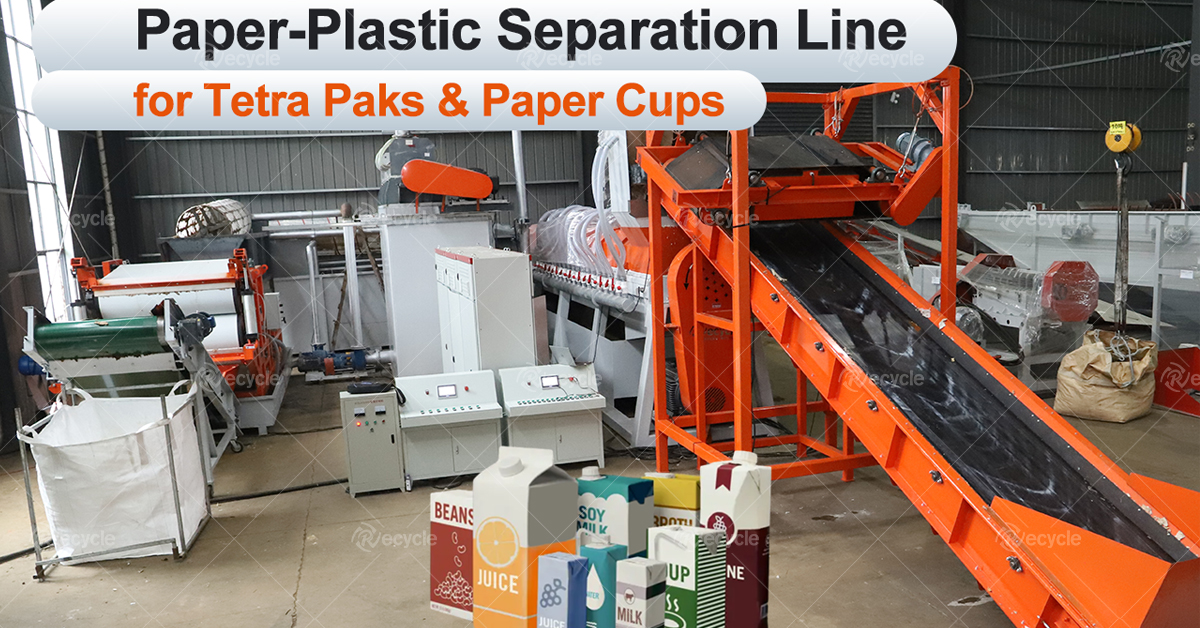
Key Steps in the Paper-Plastic Separation Process
1. Hydro-Pulping & Fiber Defibering: Composite packaging is introduced into a high-density pulper with water. Hydraulic shear forces strip wood pulp away from the plastic film without chopping the plastic into fine particles.
2. Coarse & Fine Screening: Separated paper slurry is screened to remove plastic ribbons and heavy impurities, delivering clean pulp ready for papermaking.
3. Friction Washing & Plastic Cleaning: The remaining plastic-aluminum mixture undergoes high-speed friction washing to strip away lingering organic residues and paper fibers.
4. De-watering & Drying: Mechanical squeezing and thermal drying prepare the plastic film for pelletizing or further aluminum separation.
Commercial Value of Output Materials
– Recycled Pulp: High-strength long wood fibers are sold to paper mills for corrugated boxes, tissue paper, or kraft linerboard.
– Polyethylene (PE) Film: Clean PE film is pelletized into recycled plastic granules for blow molding or industrial applications.
– Aluminum Foil: Electrostatic aluminum-plastic separators reclaim pure aluminum powder or flakes used in metallurgy and chemical manufacturing.
By implementing an automated sorting plant, recycling facilities convert low-cost packaging waste into three distinct revenue streams while maintaining full environmental compliance.