
Dry vs. Wet Paper-Plastic Separation Comparison
Dry vs. Wet PaperPlastic Separation: Which Recycling Technology Yields Higher Profitability?
When selecting equipment for processing composite materials such as coated paper, paper cups, milk cartons, and paper mill rejects, investors face a fundamental choice: Dry mechanical separation vs. Wet pulping separation.
Understanding the operational differences, recovery purity, and financial returns between these two methods is vital for building a successful recycling plant.
Dry Separation Overview
Dry separation relies on shredding, air classification, and electrostatic separation, without the use of water.
Pros: Zero wastewater treatment requirement; smaller footprint.
Cons: Lower fiber purity; high dust generation; plastic film often retains bonded paper fibers, decreasing resale market value.
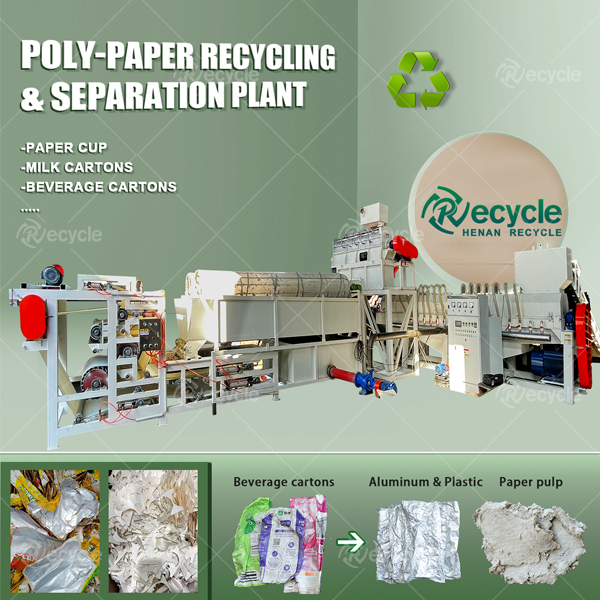
Wet Separation Overview
Wet pulping uses hydraulic forces and liquid friction to disintegrate composite packaging.
Pros: Extremely high fiber recovery rate (>95%); produces high-purity virgin-grade pulp; clean PE film; zero dust pollution.
Cons: Requires closed-loop water circulation and filtration systems.
Comparative Performance Metrics
| Feature | Dry Separation | Wet Separation System |
| Fiber Recovery Rate | 70% 80% | 95% 98% |
| Pulp Quality | Contaminated with plastic dust | Highgrade clean paper pulp |
| Plastic Purity | Moderate (residual paper coating) | Extremely high |
| Ideal Materials | Dry laminated cardboard | Milk cartons, paper cups, paper mill rejects |
Why Wet Separation Leads Industry Return on Investment
While dry separation appears simpler on paper, a dedicated wet paper-plastic sorting solution delivers significantly superior financial yields. Paper mills and plastic compounders pay premium prices only for uncontaminated pulp and clean PE film.
Furthermore, modern wet sorting systems incorporate automated water recycling and sedimentation units, minimizing freshwater usage while meeting strict environmental discharge standards.