
More News
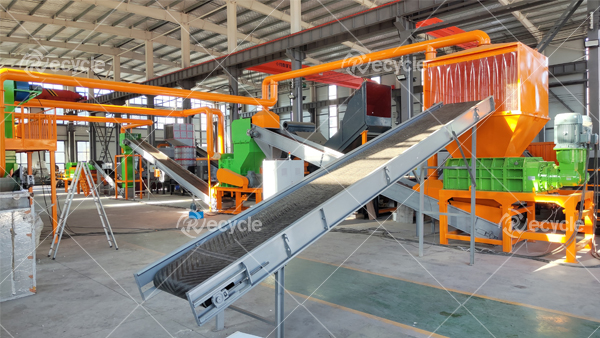
PCB E-Waste Recycling Machine
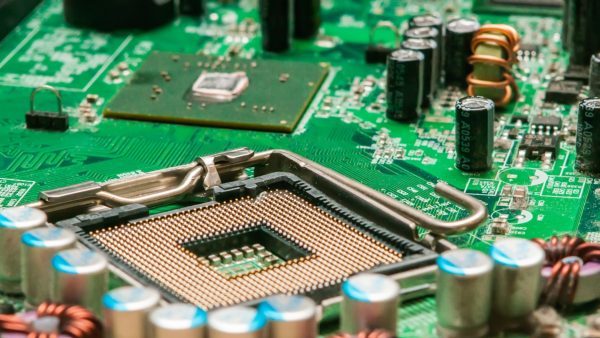
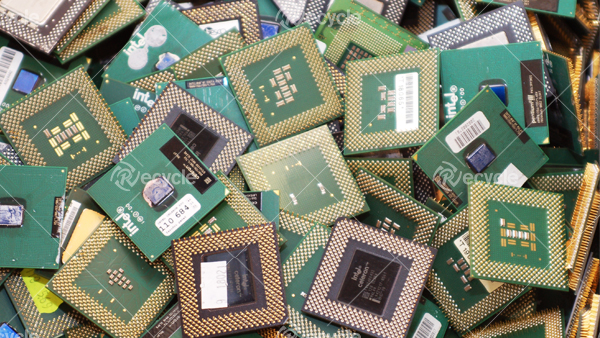
The growing volume of discarded computers, communication equipment, circuit boards, and other electronic products has created a new demand for efficient recycling technology. Among these materials, printed circuit boards (PCBs) are particularly valuable because they contain a mixture of metals, plastics, fiberglass, and electronic components.
A PCB E-Waste Recycling Machine is designed to process waste circuit boards and separate reusable materials into different fractions. Instead of treating discarded PCBs as ordinary waste, a properly configured recycling system can recover valuable metals while reducing the amount of material sent to landfill or incineration.
Why PCB Waste Requires Specialized Recycling Equipment
A discarded circuit board is not a single-material product. Its structure normally combines copper tracks, electronic components, fiberglass, resin, solder, and other materials. Some boards can also contain small quantities of precious metals. This composition makes manual separation slow and difficult for commercial-scale processing. Traditional disposal methods may also result in the loss of recoverable resources.
A PCB recycling system approaches the problem differently. The board is first reduced to a suitable particle size, and the processed material is then separated according to differences in physical properties. This creates a more practical route for recovering copper and other valuable fractions from electronic scrap.
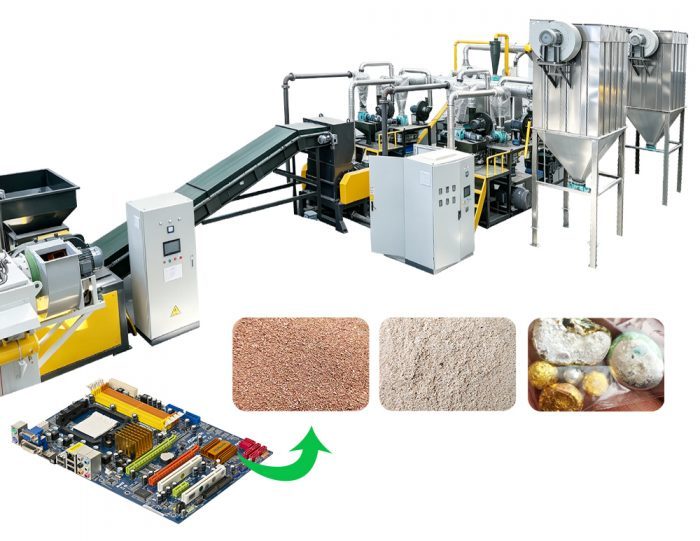
How a PCB E-Waste Recycling Machine Works
The exact configuration depends on the type and condition of the incoming PCB material, but a typical recycling process can include several stages.
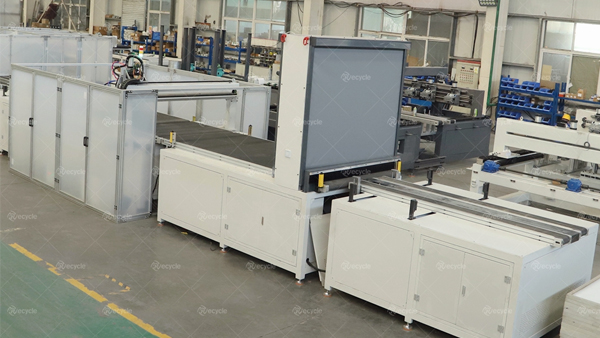
- Feeding and preliminary sorting: Waste circuit boards are first loaded into the processing system. Oversized components or unwanted materials can be removed during preliminary sorting. This step helps protect downstream equipment and improves the consistency of the feedstock.
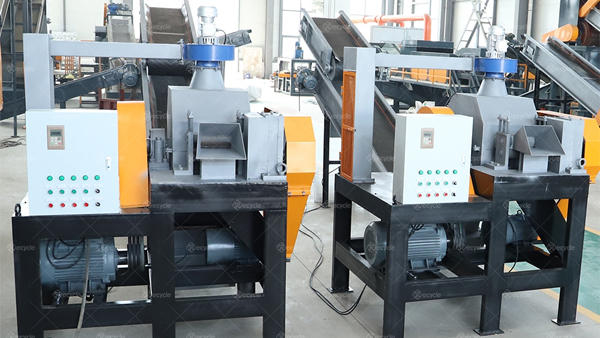
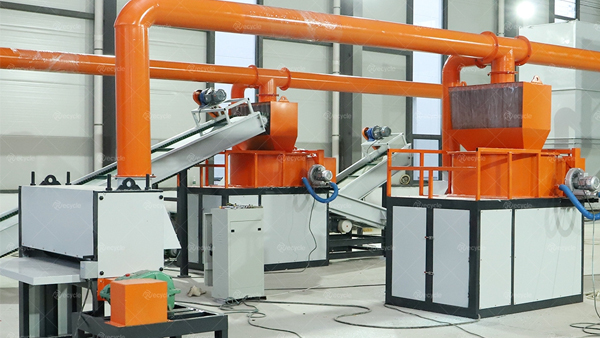
- Crushing: The circuit boards are reduced in size using a suitable crushing or shredding system. Size reduction exposes the internal material structure and prepares the PCB waste for further processing.
- Fine grinding: After primary crushing, the material may enter a grinding stage. The purpose is to obtain a controlled particle size so that different materials can be separated more effectively in subsequent stages.
- Dust collection: PCB processing generates fine particles, so an appropriate dust-collection system is essential. It helps maintain a cleaner working environment and prevents fine material from escaping into the surrounding area.
- Material separation: Depending on the system design, separation equipment can be used to divide conductive metal particles from non-metallic fractions. Copper-rich material can be collected as a valuable product, while fiberglass, resin, and other non-metallic components are separated into another stream.
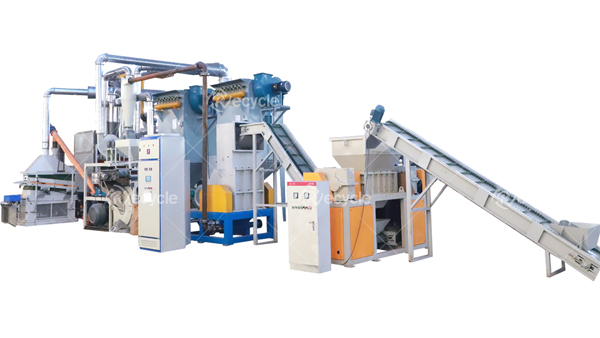
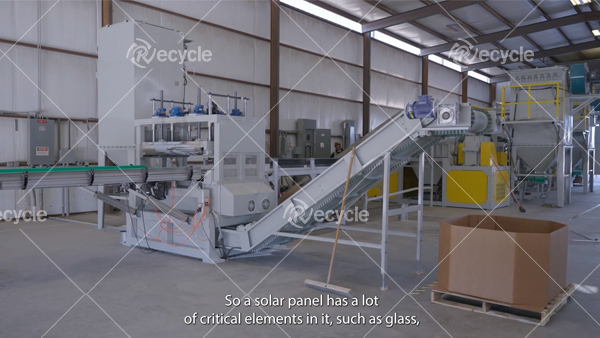
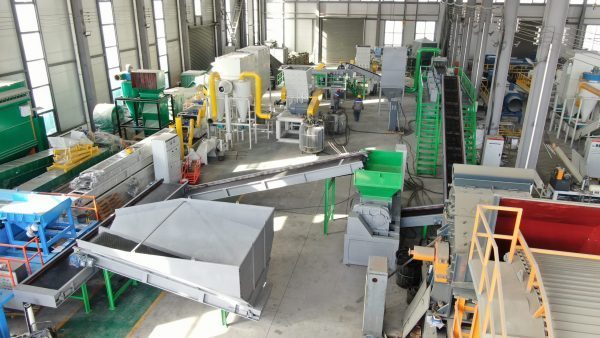
The complete line can therefore combine crushing, grinding, conveying, dust control, and separation equipment into a continuous processing system.
Rated Recycling Line Can Be More Effective
A typical arrangement may include feeding equipment, primary crushing, secondary size reduction, grinding, conveying, separation, and dust collection. The advantage is not simply automation. A properly matched system allows each stage to prepare the material for the next one. Consistent particle size, controlled feeding, and efficient separation can all contribute to more stable operation. For companies handling significant quantities of electronic scrap, this approach can also simplify daily operations and reduce manual material transfer.