
More News
Lithium-Ion Battery Recycling Machines for Black Mass Recovery
The rapid growth of electric vehicles, energy storage systems, portable electronics, and power tools has led to a continuous increase in the volume of spent lithium-ion batteries. These batteries contain abundant valuable materials, including lithium, nickel, cobalt, manganese, copper, aluminum, and graphite. Recycling facilities should not treat spent batteries as ordinary waste but rather process them into recoverable material streams.
Lithium-ion battery recycling machines are designed to break down spent batteries into smaller particles and separate out valuable components. One of the most important outputs of this process is “black mass”—a fine, powdery mixture containing both cathode and anode materials. Consequently, recovering high-quality black mass has become a key objective for battery recycling companies.
What is Black Mass in Lithium Battery Recycling?
Black mass is the fine powder produced after the mechanical processing of lithium-ion batteries. Its composition depends on the battery chemistry and the type of feedstock being recycled. Typical black mass may contain active electrode materials such as lithium compounds, nickel, cobalt, manganese, and graphite. Specific compositions vary depending on chemistries like lithium cobalt oxide (LCO), nickel manganese cobalt (NMC), lithium iron phosphate (LFP), and others.
For recycling plants, the goal is not merely to shred the batteries. Mechanical systems must liberate valuable electrode materials while minimizing contamination from casing materials, copper, aluminum, and other components.
Therefore, equipment selection is critical to the quality and recovery rate of the final black mass product.
How Do Lithium-Ion Battery Recycling Machines Work?
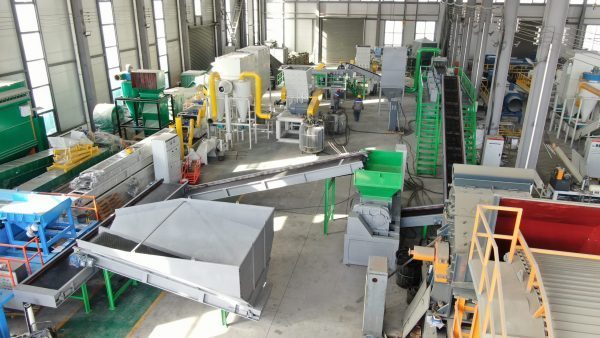
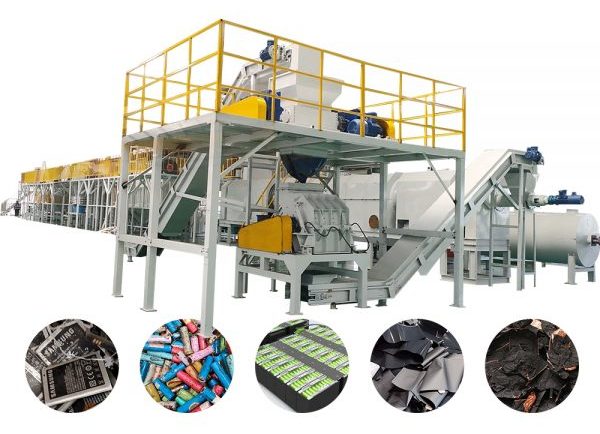
A complete recycling process typically involves multiple mechanical stages rather than relying on a single machine.
The first step is feedstock preparation. Depending on the battery type, spent cells, packs, modules, or production scrap may require sorting and preliminary dismantling. Large battery packs often contain casings, cables, connectors, cooling components, and electronic parts that must be removed prior to further processing.
Once prepared, the battery material enters a size-reduction system. Shredders or crushers break the batteries into smaller fragments, exposing the internal electrode materials. The appropriate machine configuration depends on the physical characteristics of the feedstock and the required processing capacity.
The shredded material may then proceed to further crushing or grinding equipment. Achieving a finer particle size facilitates the separation of electrode materials from metal foils and other components. After particle size reduction, separation equipment is used to divide the material into different components. Magnetic separation removes ferrous contaminants, while screening separates particles based on size. Depending on the feedstock and process design, air classification or other separation techniques may also be employed. The final mechanical processing stage concentrates the fine electrode materials into black, solid lumps.