
How Electrostatic Separators Recover Ultra-Fine Copper from Waste Printed Circuit Boards
Waste printed circuit boards (PCBs) contain up to 20% to 30% copper alongside precious metals and fiberglass-reinforced resin. However, once PCBs are pulverized to liberate metals from non-metals, standard gravity air tables struggle to capture ultra-fine copper particles (below 0.1 mm). A high-voltage electrostatic separator overcomes this physical limit by exploiting differences in electrical conductivity, achieving copper recovery rates exceeding 99% in a completely dry, zero-pollution process.
The Physics Behind High-Voltage Electrostatic Separation
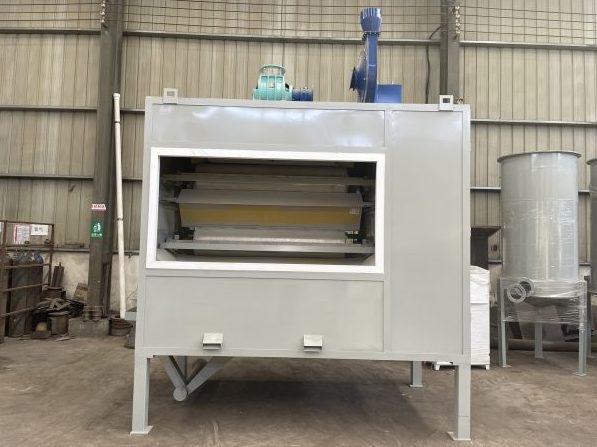
Electrostatic separation relies on corona discharge and electrostatic induction inside a grounded rotating drum chamber:
-
Corona Charging Zone: Crushed PCB powder is evenly fed onto a grounded rotating metal roller. As particles pass beneath a high-voltage corona electrode (typically 25 kV to 50 kV), both conductive copper and non-conductive resin/fiberglass particles acquire a negative surface charge.
-
Rapid Charge Dissipation of Copper: Because copper is an excellent conductor, metallic particles immediately transfer their negative charge to the grounded drum upon contact. Having lost their charge, they are thrown off the drum cleanly by centrifugal force into the metal collection hopper.
-
Electrostatic Pinning of Resin: Non-conductive fiberglass and epoxy resin powders retain their negative charge. They remain pinned tightly to the grounded drum surface until a rotating brush scrapes them into the non-metal tailings bin.
Why Electrostatic Separation Outperforms Air Gravity Tables on Fine Powders
When processing fine PCB fractions between 0.05 mm and 0.6 mm, relying solely on airflow separation leads to significant metal loss:
-
Captures Ultra-Fine Dust: Air classifiers often blow ultra-fine copper dust into the resin tailings due to aerodynamic drag. Electrostatic forces act purely on electrical conductivity regardless of particle weight, rescuing fine copper value.
-
99%+ Metal Purity: Multi-stage electrostatic drums with built-in middling recycling loops produce clean, bright copper concentrate free of resin impurities, commanding top smelter pricing.
-
100% Dry Physical Process: Unlike wet shaking tables or acid leaching, electrostatic separation requires zero water and produces zero toxic effluent or sludge.
Essential Operating Conditions for Peak Separation Efficiency
-
Maintain Strict Moisture Control: Raw PCB powder must have a moisture content below 1%. Humidity causes non-conductive resin particles to leak charge prematurely, reducing separation purity.
-
Optimize Particle Liberation Size: Crush circuit boards to a uniform 20 to 60 mesh size so copper traces are fully detached from the fiberglass substrate without over-grinding into smoke-like dust.
-
Stabilize Ambient Humidity & Drum Temperature: Equip the electrostatic housing with an integrated constant-temperature heating element so condensation never interferes with the high-voltage corona field.
Frequently Asked Questions (FAQ)
What happens to the mixed middling particles that fall between the metal and resin hoppers?
Industrial electrostatic separators include an adjustable splitter plate and an automatic closed-loop bucket elevator that routes intermediate middling particles back into the feed hopper for a second pass, ensuring near-zero copper loss.
Is a high-voltage electrostatic separator safe for plant operators?
Yes. Although the system operates at high voltage, the current is extremely low (at the milliampere level). Fully enclosed, grounded cabinets and automatic safety interlock switches immediately cut power and discharge residual static whenever an inspection door is opened.